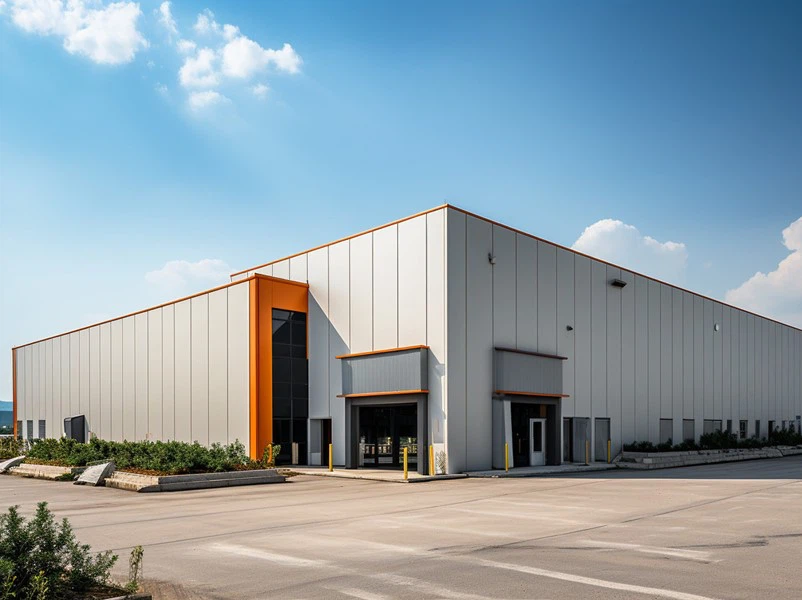
About us
Dalian Polyfull Intelligence Technology Co.,Ltd. is a professional machine tool manufacturing enterprise, the main products include lathe, milling machine, grinding machine, etc., and according to customer needs we also can design and manufacture various special purpose machines, to provide relative technology upgrading and transformation services in machine tool field. Meanwhile we are a company that produces automated robots. We can design,develop, install, test, debug industrial robot, it's units and related accessories including fixture transmission device, positioning device and control system.
Why Choose Us
Profession team
We use self-developed machine tools and robots to provide customers with flexible automated production lines and improve the competitiveness of customers.
Our service
Adhering to the "quality products, of high quality service". We provide you with online answers 24 hours a day.
Quality control
Standardized and fully optimized quality control, craftsmanship in manufacturing processes and processing equipment, ensuring product quality.
Our product
We can design,develop, install, test, debug industrial robot, it's units and related accessories including fixture transmission device, positioning device and control system, we can provide welding robot, slicing robot, painting robot, assemble robot, burnishing robot, handing robot, inspect robot, arc welding robot and so on.

All the main components of this welding robot (motor, gearbox, etc.) are designed and manufactured by themselves, small size, flexible work, arm length 1466mm, default load is 6KG, can provide customized services according to customer needs, such as: customized operating system language, customized load weight, customized flexible production line.

All the main components of this robot (motor, gearbox, etc.) are designed and manufactured by ourselves, and it is also our best-selling inspection robot at present.
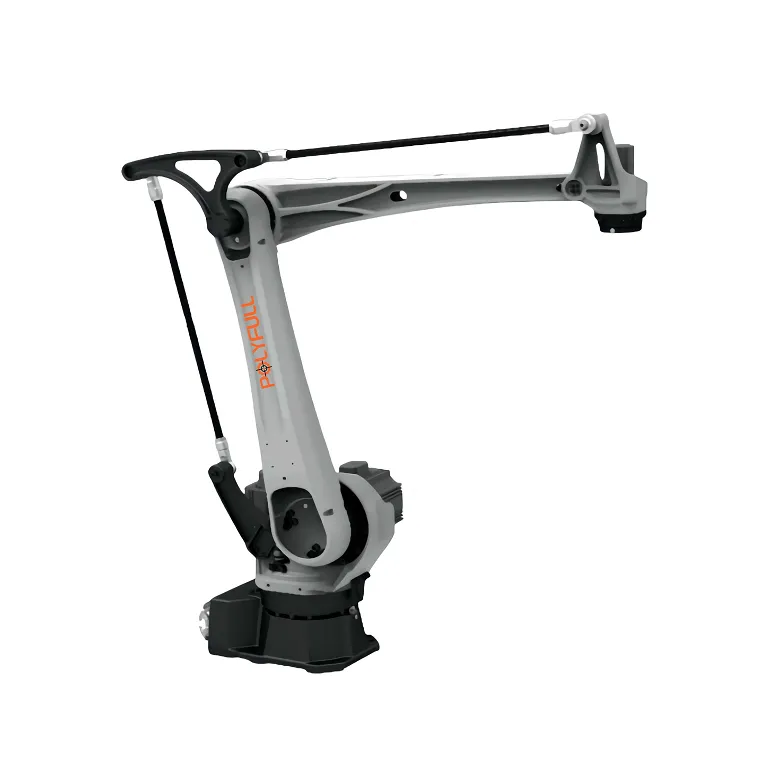
Polyfull independent research and development of automatic painting industrial robots. spray lacquer robot is mainly composed of robot body, computer and corresponding control system, using 4 or 6 degrees of freedom joint structure, the arm has a large movement space and can do complex trajectory movement, can move flexibly.

All the main components of this welding robot (motor, gearbox, etc.) are designed and manufactured by themselves, small size, flexible work, arm length 1466mm, default load is 6KG, can provide customized services according to customer needs, such as: customized operating system language, customized load weight, customized flexible production line.

Universal six-axis handling robot, universal six-axis efficient robot, with high-precision repeatable positioning characteristics, repeatable positioning accuracy ±0.05mm, arm length 2029mm, large work coverage, load 10kg, six-axis robot has flexible characteristics, can work in complex environments.

Cooperative six-axis robots are suitable for complex tasks that require a large number of degrees of freedom. Maximum arm length 1839mm, maximum bearing capacity 25KG. Lightweight arm design, compact and simple mechanical design, can work flexibly in a small space to meet the needs of flexible manufacturing.

The six-axis palletizing robot is a kind of self-manufacturing tool with the advantages of fast operation and high precision. Our products have a beautiful appearance, good texture, corrosion resistance, compact design and light weight because they are made entirely from high-quality raw materials.

Six-axis loading and unloading robot, arm length 2340mm, repeated positioning accuracy ±0.08mm, load 50kg, the use of integrated processing technology, suitable for production line loading and unloading, workpiece turnover, workpiece rotation, automatic loading and unloading robot is designed to achieve the automation of these links.

Robot assembly line, Assembler robot, automobile assembly robot, six-axis automatic assembly robot, Arm length 1516mm, load 12kg, repeated positioning accuracy 0.05mm, protection level IP54, wrist IP65. Multilingual operating system.
An automotive welding robot is a robot system used for manufacturing. Industrial robots are automated, programmable and capable of movement on three or more axes. They load parts, move the torch, weld, monitor the quality of the said weld, and then unload the completed part. Some custom machines even have product quality checks added into their programming. Depending on the operation, an operator may need to be present.
Advantages of Automotive Welding Robot
Enhanced efficiency
Reduce cycle times, increase productivity, and minimise downtime, leading to a streamlined manufacturing process.
Improved quality
The precision and repeatability guarantees consistent, high-quality welds, resulting in superior automotive products.
Safety and ergonomics
By automating tasks, robots reduce the risk of workplace injuries and improve the overall ergonomic conditions for workers.
Safety
These welders increase safety in the workshops by removing the human element from hazardous welding work. Such as keeping workers away from fumes, chemicals, extreme heat and noise, as well as weld flash.
Within a manufacturing environment, two types of welding robots generally get used. A semiautomatic and automatic welding robot system each have a role. The semiautomatic robotic welding system relies on human control for smaller-scale jobs. The controller will set the parameters for the robot to perform a simple operation. When complete, the person in control will handle the finished part.
In automotive manufacturing, a more intricate system is critical for uninterrupted flow. Welding robots get a series of commands to keep the assembly process moving. The automatic robotic welding system involves the machine in the entire line function. The robot gets programmed to pick the part, place it on the welding platform, and perform the weld. The customized machines will then upload the completed task to the assembly stage. With this type of welding automation, robots perform a repetitive tasks. In some cases, a human controller needs to be present to ensure the quality of work. But with reprogramming, it is often the case that welding robots will work independently.
For several reasons, the automotive industry has moved to more use of robotics to build cars. The main factor is to reduce the chance of human error. Yet, that does not mean the human element is obsolete. Personnel is crucial to maintaining quality standards and for machine calibration. Technicians will also perform repairs on faulty machines. But repetitive tasks can get performed with greater speed and efficiency with robots. Welding automation takes on these tasks with more precision through programming. Plus, a welding robot system will affix parts the same way each time and faster. Different welding robots perform a variety of functions in automotive manufacturing. From a spot weld on a large piece of body panel to an intricate computer part, robotic welding is vital. Welding robots also receive programming to collaborate on larger jobs in line assembly.
Body-in-white (biw) welding
Effortlessly handle biw welding tasks, joining various components of the vehicle body with utmost precision. This results in improved structural integrity and overall safety of the vehicle.
Chassis welding
Robots are capable of welding chassis components, such as frames and subframes, ensuring optimal strength and durability, crucial for vehicle stability and performance.
Exhaust system welding
Automation plays a vital role in assembling exhaust systems, maintaining tight tolerances for leak-free and efficient exhaust performance.
Spot welding
Excel in spot welding applications, providing consistent and reliable welds on intricate automotive parts, increasing production efficiency.
Seam sealing
Precise application of seam sealer is essential to protect vehicles from external elements.We ensure uniform and controlled sealing for optimal vehicle longevity.
Popular Automotive Welding Robot Processes
Resistance welding
Resistance welding is one of the most common types of robotic welding because of its economical benefits and versatility of function. In this process, a current passes between two pieces of metal, forming a pool with the heat and joining the pieces together. Spot welding is a type of resistance welding. This type of welding is used primarily to join thin metal together. Typically, this practice is used in the automotive industry to join sheet metal frames together.
Arc welding
Arc welding uses an electrode to create the heat necessary to melt and weld the metal components together. This type of welding is used for applications that require high accuracy and repeatability.
Tig welding
Tungsten inert gas (tig) welding is used for projects that require precision, such as welding bicycle frames and completing other complex products. This is a type of arc welding process that uses a non-consumable tungsten electrode to produce the weld. Typically, this is a slower weld because of the complexity of the process.
Mig welding
Metal inert gas (mig) welding uses a high rate of melted filler metal to create the weld. The process involves a wire that is fed toward the heated weld tip. Mig welding is a subtype of gas metal arc welding and is best used for applications that require simplicity and speed.
Laser welding
Laser welding uses a laser generator that delivers a laser light via a fiber optic cable through a robotic cutting head to weld pieces together. Laser welding is often used in high volume applications that require high accuracy, especially in the automotive sector.
Guide to Buying a Automotive Welding Robot
1.Peripherals
Some welding robots need add-ons for them to work, this is an added cost that should be avoided if you can. Go for a welding robot that comes in a whole package, with the ability to handle a myriad of functions without the need to spend more on buying other parts. If you have to buy one that needs accessories, make sure the parts in questions are easy to find locally.
2.Space availability
The number and the size of the welding robots you intend to acquire depend on the space available at your plant. When replacing human labor with robots, you will be forced to clear the floor in advance. The bigger space, the more the number of welding robots that can be fitted in and vice versa. If you were running a small factory and you intend to automate you will need bigger floor space.
3.Nature of work
Some manufacturing processes do not require advanced welding processes, but if you are in the kind of manufacturing that involves heavy metallic parts then robotic welding would be the most sensible route to take. Automotive manufacturing involves the use of heavy car parts that cannot be handled well by human labor, welding robots are the only option left in that industry.
4.Flexibility
Most robots involved in manufacturing are task-oriented, i.E they are designed to handle a specific role. As much as this makes them efficient, it does limit their range and when you consider their cost, it would really help you a lot if you can get a factory robot arm that can handle more than one role. A welding robot that can also handle picking and placing would be a better investment compared to one that can only handle welding.
5.Availability
It will cost you more to import a specific type of welding robot if it cannot be found locally. If you happen to live near a major robot manufacturer you may be lucky enough to even place special orders for customized robots. The use of industrial robots is not as widespread in all areas, this makes industrial automation manufacturers to be concentrated in specific areas that may be located too far from where your plant is.
6.Support
After-sale support is vital when it comes to handling robots. They are machines like any other, only highly advanced. Regardless, they will eventually break down or malfunction after prolonged use. When this happens you will require help with them without having to fork out crazy amounts of money.
7.Spare parts availability
Overused welding parts like end effectors are most likely to break down as they do most of the work. Any movable part is prone to the friction of some kind and even though it takes time, they will need replacements along the way. Select a welding robot whose spare parts are readily available at a moment' s notice.
8.Software upgrades
The availability of software upgrades is also another big factor that should help you narrow down on the type of welding robot you would want for your factory. Upgrades make the robots become more efficient, being stuck with a robot that is using software that is overdue may start affecting the quality of production. Go for robots that have constant software support all through with upgrades at least once a year.
Integrating Automotive Welding Robot with Other Manufacturing Processes
Automation doesn' t have to be all-or-nothing. For example, a manufacturer can have 'islands of automation' for some areas such as cutting, welding, inspection, while assembly, machine tending, and material handling remain manual. Integrated systems often use computer software and connected devices to coordinate components. One powerful tool is programmable automation controllers (PACs), which synchronize equipment with a human-machine interface (HMI) and teach pendant, gather data about speed and motion, and even make adjustments to operations based on data from other equipment it' s connected to.
An automotive welding robot cell that utilizes a MIG robot, nut welder, and material handling robot. It is designed to accommodate 53 different model numbers of welded components and can run for one hour unattended. It also features conveyors, automatic changeover capability (in which fixturing automatically adjusts when a part' s barcode is scanned), and vision cameras. A MIG robot welding cell in an automotive manufacturing facility that welds aluminum bumpers. It is a two-station welding process with an automatic transfer between the two weld stations. An operator loads parts into each station, then removes the completed weldments at the end of each cycle.
Especially when workpieces are large or work takes place in a small area, the ability to coordinate robots' movements allows several to perform work in the same space at the same time. Robots can also coordinate with human operators to perform parts of a larger task. For example, while a human operator loads the next part at the front of the welding cell, a robotic arm with a gripper can remove a finished assembly from the weld fixture through the back, then place it on a conveyor. Automating one task/process can have implications up and downstream. For example, the great precision of robot welding means there' s less room for the variations in cut angles or seam alignment that a skilled human welder can easily adjust for. Cutting/forming must be held to tight tolerances so that part fit-up is at a level a robot welder can work with. Another consideration is the increase in throughput that may result due to the high speeds possible with automotive welding robot, you need to be sure operations up- and downstream can accommodate the change and that you have a plan for transferring more parts quickly.
Our Factory
Dalian Polyfull Intelligence Technology Co.,Ltd. is a professional machine tool manufacturing enterprise, the main products include lathe, milling machine, grinding machine, etc., and according to customer needs we also can design and manufacture various special purpose machines, to provide relative technology upgrading and transformation services in machine tool field. Meanwhile we are a company that produces automated robots. We can design,develop, install, test, debug industrial robot, it's units and related accessories including fixture transmission device, positioning device and control system. We can provide welding robot, slicing robot,painting robot,assemble robot,burnishing robot,handing robot,inspect robot,arc welding robot and so on. We have provided many references for the automation industry in China.