


Horizontal Machining Center
What Is Horizontal Machining Center
The machining occurs on a horizontal machining center (HMC) with a spindle parallel to the worktable and the floor. With this arrangement, the tool sticks out of the side of the tool holder and machines across the side of the workpiece, allowing chips to drop away and avoiding having to clear chips from the table. Horizontal machining centers also accommodate two pallet changers, allowing unattended production work and reducing part cycle times. The time saving occurs because work is loaded on one pallet of the HMC while machining is happening on the other pallet. After one part is machined, the pallet will index, and the next workpiece is ready.
Advantages of Horizontal Machining Center
Speed
Shops that require quick turnarounds can benefit from a horizontal machining center. These machining centers can cut at fast speeds for better surface finishes.
Capacity
Again, a horizontal machining center is ideal for large-scale projects. Hmcs typically have higher table load capacity as they do not push down, against the table, with the power of the spindle.
Chip evacuation
When comparing a horizontal machining center vs. A vertical machining center, horizontal options are better for chip evacuation. They can produce greater throughput because of the ease of chip removal.
Durability
A horizontal machining center is a sturdier option than vertical machining centers. They typically have a rigid box-way design that offers additional durability. Thanks to this structure, a horizontal machining center can often provide improved damping and increased rigidity for greater accuracy. Its durability allows for less wear and tear on the machine, further reducing costs and providing more reliability.
Precision
While horizontal machining centers are not as precise as vertical mills, they can still deliver outstanding accuracy. Horizontal machining centers are perfect for large production runs because of their notable speed and precision. They also minimize the risk of human error by utilizing automated cuts and geometric dimensioning and tolerancing.
Decreased costs and increased profits
A shop or manufacturer can get more out of their labor costs with a horizontal machining center. These mills have great speed and capacity, so they can achieve higher production for the same labor costs, making it possible to increase your profits.


Why Choose Us

A horizontal machining center shares a similar design to vertical machining centers. However, its spindle axis is horizontally oriented and parallel to the work table. The spindle on an horizontal machining center also performs slightly differently than a VMC does.This kind of machining center is best suited for large-scale and fast productions. They also generally create smoother surfaces on workpieces and require less fabrication at the end of production than vertical machining centers. In addition to reducing the need for workers and having faster processing times, horizontal machining center have many other benefits as well. There are various applications in which horizontal machining centers are a better choice than a VMC.
Since horizontal machining centers can cut workpieces from various angles, they are a great choice for cutting the following. In addition, horizontal machining centers are suitable for projects that require side-oriented work or projects that require cutting on multiple sides. When working with large or heavy materials, an HMC is an ideal choice because of its stability and durability. Horizontal machining centers have better chip evacuation than other types of mills. This makes them more suitable for applications that need clean, smooth surface finishes and faster production speeds. When there is larger volume production, an HMC has the solid construction to handle the job. That’ s why so many industries use this type of machining center.
Choosing the Right Horizontal Machining Center
Machining centers are extremely versatile tools that serve many different functions. It’s important to find the right fit for your shop’s unique needs. Consider the following when choosing the right machining center for your application. It is important to think about the spindle orientation when deciding which type of machining center to choose. As a general rule of thumb, applications that require extreme precision and attention to detail typically require a vertical machining center. Before landing on the right machining center for your shop, consider your budget. When picking your machining center, account for table size and travel. Your table’s size should be slightly larger than the area you need for your application.
Table travel, also called axis travel, refers to the maximum milling area your spindle can reach. You’ll need to assess spindle-table distance as well to find the right specifications for your needs.Next, consider how many axes your application will require. Most machining centers have three axes, a vertical one that allows you to adjust the height of the spindle and two horizontal ones to move the table in longitudinal and transverse directions.
Some applications will need four or five axes, depending on the machine angles you need to reach. When choosing between horizontal and vertical machining centers, consider the machining center’s capacities and your application’s needs. Spindle speed is important because it affects surface roughness. Using the right speed will help maintain your tools and improve the surface finish.
Horizontal machining centers come in varying models each engineered uniquely to perform distinct machining functions. This may result in distinct working processes. However, typical horizontal machining center perform varying machining operations in the following steps.
First, your raw materials or workpieces are fed onto the machining center and carefully positioned on the worktable. In advanced horizontal machining centerendowed with pallet changers, the loading process is automated. The loaded workpiece is then secured in place by firmly constraining it to your worktable. This is quite significant as it ensures your object is accurately positioned and avoids its movement during machining. Consequently, the appropriate machining tool needed to process your workpiece is chosen and retrieved from the magazine. The designated tool is then mounted on the tool holder ready for machining.
Once the workpiece and the center are well set up, machining instructions are keyed into the center’ s controller. These instructions include the machining operation, the cutting depth, and the cutting machining speed. Once your instructions are keyed in, the horizontal machining center commences the machining process automatically. The machining tool is brought into contact with your workpiece by moving the spindle along a specified axis. This results in a well-shaped, drilled, or threaded workpiece. The machining operations undertaken often result in friction and heat generation. This necessitates coolant and lubricant application to facilitate smooth operations. This step is initiated once you are satisfied with the quality of your machined product. This process can be undertaken automatically or manually.

Horizontal machining centers remain the preferred machining solution for heavy-duty machining operations thanks to their robust machining tools. For example, construction equipment parts, engine blocks, and large molds. 4-axis and 5-axis horizontal machining centers are used to perform complex machining operations like internal threading. The inclusion of double pallets makes them perfect for high-volume production of components.
Their accuracy and high automation level have driven up their use in manufacturing industries to produce prototypes and consumer products. The dual-spindle design allows our horizontal milling machines to perform turning and milling operations in a single setup. Because of the horizontal configuration and multiple spindles, our equipment can machine more parts with higher-quality surfaces than most conventional production equipment.
One of the most significant benefits of these machines is that they can turn components without rotating the actual workpiece, enabling faster production times while creating a much safer work environment.They are especially effective on heavy parts as well as those that require machining from multiple sides. In addition to more efficient chip management, horizontal configurations typically offer faster processing times due to the ability of operators to change pallets.
What are Five-Axis Horizontal Machining Centers?
5-Axis machining centers are becoming more prevalent and are a step up from the typical 3-axis horizontal machining centers. In addition to the X-axis, Y-axis, and Z-axis, the 5-axis machining center add two rotary axes from the A-axis, B-axis, and C-axis.
Five-axis machining involves moving CNC cutting tools across five different axes simultaneously. This machining is a high-efficiency, high-precision process during which the workpiece is entirely machined by clamping it once. Five-axis machining is ideal for machining complex and intricate parts in aerospace, automotive, high-precision medical devices, and the military.
How to Clean a Horizontal Machining Center
Inspect the interior and exterior
Dirt and grime are normal after plenty of use. But check your CNC machine for cracks, dents, or corrosion that could affect its performance. Are any keys or dials missing? Make a note to contact your manufacturer for replacement parts.
Degrease the exterior
First, apply a degreasing agent to the top, bottom, and sides of the machine to remove built-up debris. You may have to experiment a bit to find the right degreaser-to-water ratio that works best for your machine. If you have sticky residue from tape, apply adhesive remover and scrape it off with a putty knife. Be careful not to remove or scrub the manufacturer’ s sticker.
Clean and buff the machine
Use industrial-grade rubbing compound and a buffer pad to remove remaining smudges and markings from the machine. If your compound is drying out too quickly, use your spray bottle to apply a little water to the pad. Wipe off any residual compound once all the dirt is removed from the machine with a clean, dry cloth.
Polish
To restore your machine’ s shine and make it look like new, apply a metal polish with a clean buffing pad and a little water.
Clean dials and keypad
Carefully wipe down the CNC control panel, including the keypad and dials. Do not spray degreaser directly on the panel instead, spray a little cleaner onto your cloth and then wipe down the keys and dials with short strokes. To remove grime from in between keys, you can gently buff the keypad with a clean toothbrush.
Degrease the interior
Use a degreasing agent and a buffer pad to clean the interior of your CNC machine, being careful not to scratch any chrome parts or damage any electrical components. Once you’ re done, wipe everything down with a clean cloth.
Touch up chipped paint
If you’ re getting ready to sell your CNC machine, you may also want to do a couple of cosmetic fixes. Get a small amount of a matching color to paint over minor chips and scratches.
Maintenance and Operation Procedures for Horizontal Machining Center
The operator of horizontal machining center must be familiar with the general performance and structure of the machine, transmission system, and over-performance use is strictly prohibited. Before operating the horizontal machining center, carefully check whether the equipment spindle box and gearbox are normal, whether there is any abnormal noise, whether the guide rail surface is damaged, and whether the lubrication is good, and whether the speed control is sensitive and reliable.
According to the lubrication chart, the horizontal machining center should be oiled as required, and the oil pool and oil hole should be closed after oiling to ensure sufficient lubrication of the boring bar and tailstock bearings. Check whether the oil level and oil flow are up to standard. Regularly clean the oil felts, oil lines, and oil filters (barrels) of the horizontal machining center to keep the oil tank and oil pool clean and the oil quality good. Before starting the horizontal machining center, low-speed idling for 5 minutes to confirm that all parts are running normally before starting to work. Frequently keep the boring bar of the horizontal machining center clean and good, and install and remove the tool with standard oblique iron and copper hammer. The oblique iron installed in the boring bar must be 1-3mm below the surface of the boring bar.
When loading and unloading the workpiece on the horizontal machining center, safe lifting equipment and methods must be selected according to the shape and weight of the workpiece, and it must be lifted and lowered lightly to prevent damaging or colliding with the machine. When tightening the workpiece on the horizontal machining center, the pressure of the bolts should be appropriate, and sleeves should not be added for tightening. When the main spindle of the horizontal machining center is raised and lowered, and the workbench rotates, the clamping mechanism should be loosened first. After the lifting and rotation are completed, immediately clamp it. It is strictly forbidden to lift and rotate it with the clamping mechanism in the clamped state. It is not allowed to put the movable handle of the workbench, sliding saddle, sliding plate, spindle box, and boring bar of the horizontal machining center in the movable position to drive it quickly.
The horizontal machining center must not use the method of reverse driving the parts. When using the braking device, it should be stopped several times according to the speed. During work, check and remove the iron filings and oil stains on the upper and lower sliding plates, workbench, and guide rail frequently. Frequently keep the machine tool of the horizontal machining center clean and in good condition, and store the accessories properly. After the work of the horizontal machining center is completed, the workbench must be moved to the bed tail position, the spindle box must be lowered to the lower position, the boring bar must be retreated to the limit position, all handles should be placed in the non-working position, and the power should be cut off. Clean up the iron filings, wipe the surface of the machine tool and guide rail, add lubricant to the guide rail, and carefully fill out the shift handover record and do the handover work well.
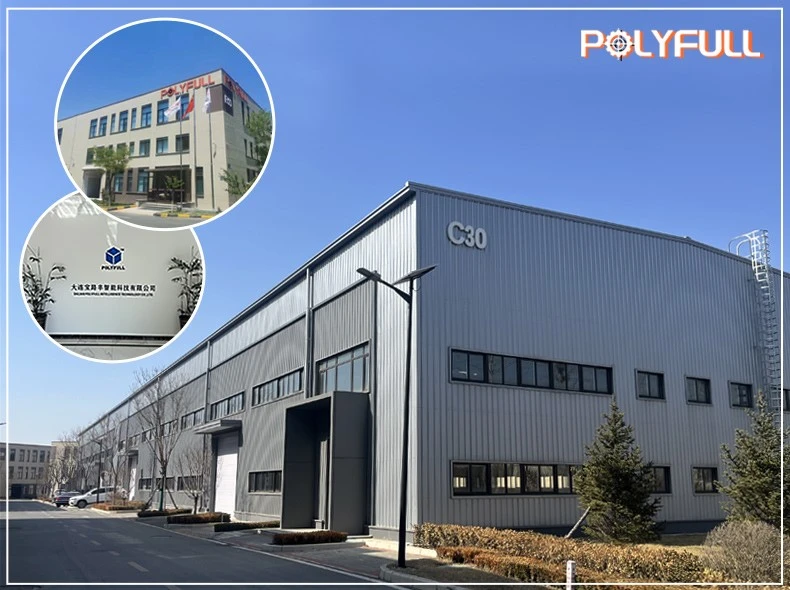
Our Factory
Dalian Polyfull Intelligence Technology Co.,Ltd. is a professional machine tool manufacturing enterprise, the main products include lathe, milling machine, grinding machine, etc., and according to customer needs we also can design and manufacture various special purpose machines, to provide relative technology upgrading and transformation services in machine tool field. Meanwhile we are a company that produces automated robots. We can design,develop, install, test, debug industrial robot, it’s units and related accessories including fixture transmission device, positioning device and control system. We can provide welding robot, slicing robot,painting robot,assemble robot,burnishing robot,handing robot,inspect robot,arc welding robot and so on. We have provided many references for the automation industry in China.

FAQ
We're professional horizontal machining center manufacturers and suppliers in China. Please feel free to buy high quality horizontal machining center for sale here and get quotation from our factory. For customized service, contact us now.
horizontal machining center for cylinders, horizontal machining center for safety equipment, horizontal machining center for pistons