About us
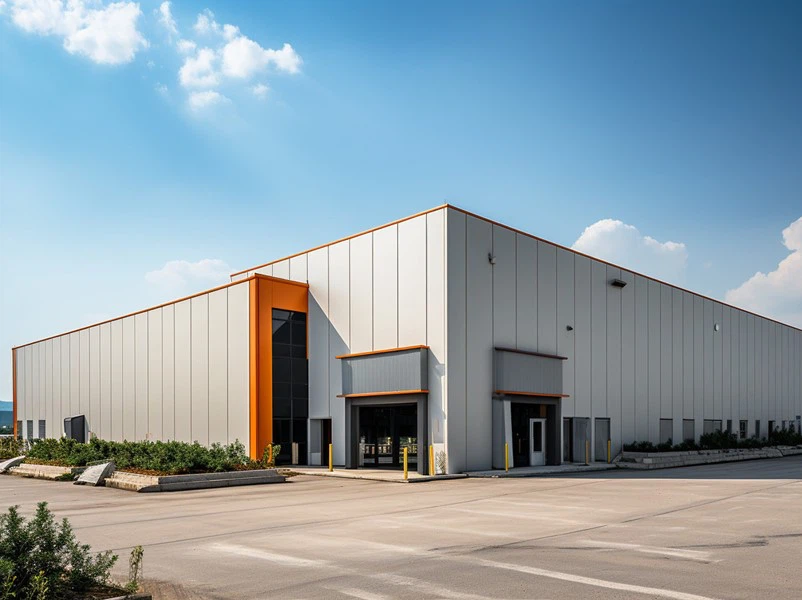
Dalian Polyfull Intelligence Technology Co., Ltd. is a professional machine tool manufacturing enterprise, its main products include lathes, milling machines, grinding machines, etc., and according to customer needs we also can design and manufacture various special purpose machines, to provide relative technology upgrading and transformation services in machine tool field. Meanwhile,e we are a company that produces automated robots. We can design, develop, install, test, and debug industrial robots, it's units, and related accessories including fixture transmission devices, positioning devices, and control systems.
Why Choose Us
Profession team
We use self-developed machine tools and robots to provide customers with flexible automated production lines and improve the competitiveness of customers.
Our service
Adhering to the "quality products, of high-quality service". We provide you with online answers 24 hours a day.
Quality control
Standardized and fully optimized quality control, and craftsmanship in manufacturing processes and processing equipment, ensuring product quality.
Our product
We can design, develop, install, test, and debug industrial robots, their units, and related accessories including fixture transmission devices, positioning devices, and control systems, we can provide welding robot, slicing robot, painting robot, assemble robot, burnishing robot, handing robot, inspect robot, arc welding robot and so on.

All the main components of this welding robot (motor, gearbox, etc.) are designed and manufactured by themselves, small in size, flexible work, has an arm length of 1453mm, the default load is 6KG, can provide customized services according to customer needs, the common application scenario is in the automobile production and manufacturing, instead of manual welding, welding efficiency is far beyond the traditional manual welding.

All the main components of this welding robot (motor, gearbox, etc.) are designed and manufactured by themselves, small size, flexible work, arm length of 1466mm, default load is 6KG, can provide customized services according to customer needs, such as customized operating system language, customized load weight, customized flexible production line.

All the main components of this robot (motor, gearbox, etc.) are designed and manufactured by ourselves, and it is also our best-selling inspection robot at present.
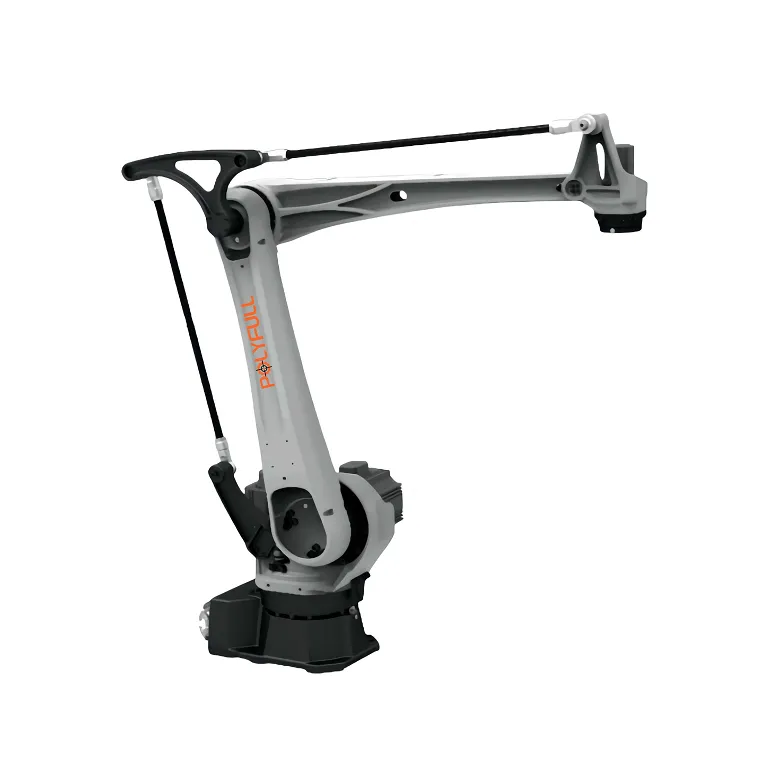
Polyfull independent research and development of automatic painting industrial robots. spray lacquer robot is mainly composed of a robot body, computer, and corresponding control system, using 4 or 6 degrees of freedom joint structure, the arm has a large movement space and can do complex trajectory movement, can move flexibly.

All the main components of this welding robot (motor, gearbox, etc.) are designed and manufactured by themselves, small size, flexible work, arm length of 1466mm, default load is 6KG, can provide customized services according to customer needs, such as: customized operating system language, customized load weight, customized flexible production line.

Universal six-axis handling robot, universal six-axis efficient robot, with high-precision repeatable positioning characteristics, repeatable positioning accuracy ±0.05mm, arm length 2029mm, large work coverage, load 10kg, six-axis robot has flexible characteristics, can work in complex environments.

Cooperative six-axis robots are suitable for complex tasks that require a large number of degrees of freedom. Maximum arm length 1839mm, maximum bearing capacity 25KG. Lightweight arm design, compact and simple mechanical design, can work flexibly in a small space to meet the needs of flexible manufacturing.

Six-axis loading and unloading robot, arm length of 2340mm, repeated positioning accuracy ±0.08mm, load of 50kg, the use of integrated processing technology, suitable for production line loading and unloading, workpiece turnover, workpiece rotation, automatic loading and unloading robot is designed to achieve the automation of these links.

Robot assembly line, Assembler robot, automobile assembly robot, six-axis automatic assembly robot, Arm length 1516mm, load 12kg, repeated positioning accuracy 0.05mm, protection level IP54, wrist IP65. Multilingual operating system.
What Is Palletizing Robot
A palletizing robot is an industrial machine that can transfer, sort, and stack boxes or items onto a pallet. You ll most commonly find them at the end of a production or manufacturing line, making neat stacks of products that a forklift can take away for storage or transportation. There are lots of industrial applications for cobot palletizers, from robotic material handling to picking the correct items to be packed. These clever machines automate potentially unsafe and dull tasks, which can lead to repetitive strain injuries over time or sudden load-related injuries or accidents. Humans tire or get bored, putting them at risk of lifting with incorrect form or slowing down, but a machine will retain the correct form and a consistent speed throughout its lifetime.
Advantages of Palletizing Robot
Increased productivity
Palletizers eliminate manual labor for unitizing products. They are much more efficient, lift heavier loads, and perform the work faster. They also do not experience exhaustion or injury. With proper maintenance, palletizers can reliably operate 24/7. This reduces any potential bottlenecks in the packaging line.
Better product handling
Since palletizers are automated machines, their movements are pre-programmed and are designed to function without damaging the product. They do not need to constantly make decisions, unlike their human counterparts. This makes them less prone to errors resulting in better product handling.
Improved workplace safety
When properly designed, palletizers eliminate workplace threats and hazards associated with manual labor. Manual palletizing poses falling, slipping, tripping, and crushing hazards. They also cause muscle strains due to the repetitive reaching and stacking of products. This can lead to lower back injuries and can permanently damage the health of workers.
Reduced operating costs
In most applications, particularly in large packaging systems, the cost-benefit analysis of acquiring a palletizer yields positive results. Savings in operating expenses can be derived from increased throughput, low product wastage, and reduced labor costs.
When Is It Time to Palletize Robot Automate?
Throughput
Any of these challenges alone could be a justification for automating this task. Throughput has a heavy impact on the bottom line of most manufacturing operations. More parts mean more revenue for you and your business. The fact that manual operators can' t match the speed of palletizing robots leads to a simple conclusion. Palletizing robots give you the most potential throughput at the end of the manufacturing line. This reduces bottlenecks and increases operational efficiency.
Labor costs
Reducing labor costs is a major reason for introducing a robot into a facility. Although they have a high upfront cost, robots pay you back over time. An industry standard is somewhere around 6-18 months for a good return on investment.
Floor space
Manufacturing facilities have a limited amount of space to perform operations. Because of this, a growing business can face some unique challenges. Maximizing throughput within the confines of a limited space poses an efficiency problem. Robots are often an elegant solution to this challenge. Reallocating a manual worker often means removing additional space-consuming elements. Such elements include additional equipment and ergonomic considerations. Automated palletizing systems can be designed custom to your specific space. This allows you to make the most efficient use of the area allocated for your palletizing process.
Workplace injuries
Palletizing tasks often involve moving heavy packages in ways that can lead to injuries. Common injuries include muscle strains and joint pain. These injuries have a severe impact on daily production. At a minimum, aches and pains will cause operators to perform tasks more slowly. Injuries could become severe enough that rehabilitation is needed. This might leave you operating less efficiently as labor must be reallocated to keep production moving.
Precautions Related to Palletizing Robot
A major feature of palletizing robots is their unique end of arm tooling. End of arm tooling is the mechanism that allows the robot to engage with the material. An example of this might be a vacuum suction cup on the end of a six-axis robot. When actuated, this pneumatic device allows the robot to pick up a box. When the box is in the proper location, the system tells the pneumatic system to stop creating a vacuum. This allows the robot to 'let go' of the box. End of arm tooling for palletizing can include pneumatic suction devices, mechanical grippers, or electromagnets. End of arm tooling can be scaled to pick up multiple packages at once. This allows end-users to find ways to optimize their palletizing operation for peak efficiency.
Most palletizing operations can be improved with the integration of a robot. However, there are other components to a complete palletizing solution. The nature of palletizing applications makes safety a top priority for successful operation. Palletizing robots are often fast and have high payload capability. This combination is dangerous for operators in the work envelop. Safety devices and proper risk mitigation help limit the likelihood of workplace injury with your robot.
Palletizing robots can be built to handle different types of packages in your facility. This may require using different types of end of arm tooling to meet the requirements of the different boxes. This could be due to size, shape, weight, etc. Robotic palletizing systems can be designed to handle these tool changes, called changeovers, automatically. This keeps your production process moving quickly and efficiently without major delays. Pallet conveyors are additional devices that are sometimes used to transport full and empty pallets in and out of the loading zone. Mobile robots can also be used for this purpose with more flexible and robust capabilities. These additional machines can be paired with your palletizing robot to automate your palletizing process further. This might increase your throughput and efficiency even further. Robot transfer units (RTUs) are systems that can move a stationary robot linearly. When paired with a palletizing robot, this system is used to extend the range of the robot. This adds to the flexibility and scalability of your palletizing robot solution.

Case palletizing
Loading of single product cases one at a time for increased flexibility and speed over manual operations.
Row palletizing
Handling complete rows of homogeneous product at a time, this option expands on single case picks for greater efficiency.
Full layer palletizing
Adding a full layer of single product cases using a standardized eoat (end of arm tool) for faster throughput rates than case or row handling.
Cobot palletizing
Safely loading pallets in environments with high operator interaction with less floor space and capital expenditure than industrial robots.
Bag palletizing
When palletizing bags, optional equipment for checkweighing, bag flattening, bag labeling, or bag squaring can be integrated prior to the palletizing cell to reduce order inaccuracies and increase load stability.
1.Single, in-line palletizing robot
This configuration is the simplest and most common type and consists of a single robotic palletizing robot. This single palletizing robot performs a palletizing function with some designs featuring secondary capabilities such as slip sheet and pallet dispensing and stretch wrapping.
2.Palletizing-depalletizing
This palletizing robot type adds another layer of versatility-depalletizing. Depalletizing is the inverse process-the individual items are disassembled and separated from the unitized or palletized load. This feature is useful in applications that require the unloading of products from mixed pallets.
3.Layer-forming palletizing robot
This robotic palletizing robot configuration involves more than one robot. Layer-forming refers to an integrated system of robots wherein each robot in the system performs a single task. A simple layer forming system is composed of two robots.
4.Mixed configuration palletizing robot
Mixed palletizing refers to the ability of robotic palletizing robots to accept different products and unitize them into a single pallet. Mixed configuration robotic palletizing robots are usually top-of-the-line. They usually have sophisticated programs, custom end-of-arm-tools, and sensors. They are the most versatile palletizing robots since they can perform minute adjustments to their arm and tooling motions without the need for reprogramming. They can adapt to the profile of the product and determine its location on the stack. Mixed configuration is useful in high sku packaging, storage, and distribution lines.
5.Cartesian palletizing robot
This type of palletizing robot has its end-of-arm-tool that can move in three directions of space, or the cartesian axes, hence the name. Its structure consists of beams and a telescopic mast actuated by servo motors, geared rollers, rack and pinion, chain and sprocket, or lead screw mechanisms. Cartesian palletizing robots are slow and limited to products with consistent weight and sizes. Their end-of-arm-tool is usually considerably basic, which is only appropriate for pick and place applications. This is generally the cheapest type of robotic palletizing robot, suiting single line speeds of up to 10 items per minute.
6.Gantry palletizing robot
A gantry palletizing robot consists of an end-of-arm-tool or end effector assembly that is mounted on a beam that can move in one axis. The beam moves on another axis; this allows movement in the horizontal plane. To move vertically, the end effector assembly can be a telescopic or articulated arm that can fold or extend vertically.
Common Palletizing Robot Parts
Column or mast
The columns and masts are the vertical parts that are directly mounted on a fixed (cartesian, gantry, and scara types) or rotating (articulated) base. The columns carry the weight of the load and the palletizer assembly. This is where the beam, arm, and end effector assemblies are attached. Hydraulics, servo motors, lead screws, or chain drives raise or lower the connected parts, enabling them to move up and down.
Beams
Beams are horizontal load-bearing components that carry the end effector assembly or end-of-arm-tool. They have guided rails that allow translational movement of a trolley that carries the tool. A single beam allows movement constrained in a single axis. A two-beam assembly, in contrast, permits movement on the horizontal plane.
Arms
Arms are two-link mechanisms that enable the end-of-arm-tool to move along the two- or three-dimensional space by rotating, extending, or folding. The links are connected by joints that offer one or two degrees of freedom. The range of motion of the palletizer is dictated by the length of the arms and the allowed motion of the joints.
Joints
Joints allow rotational or translational movement between the links of an arm. Two or more joints may be present in a palletizer system depending on the offered versatility. A palletizing robot arm with a full, unrestricted motion typically consists of six joints. Each joint offers a single degree of freedom.
Wrist
The wrist is the joint in a robotic arm that carries the end-of-arm-tool. They usually allow only rotational movement for turning the tool. Other designs can also turn the tool, granting a two-degree type of movement.
End-of-arm-tools
These are sometimes referred to as end effectors, which is a more general term. The eoat is the most important part of a palletizing robot; it is the part to which the machine's versatility is attributed. These devices pick up and drop the product in its appropriate location and orientation in the stack. They can be designed to handle not only finished products but also other materials such as packaging materials, wrappers, slip sheets, pallets, and so on.
How Palletizing Robot Works
Products to be palletized are fed into the robotic cell via the infeed conveyor system. A pallet is deposited into the pallet loading area either by an automated pallet dispenser or by the palletizing robot. The robot picks one or multiple products at a time, then quickly and accurately places them on a pallet. The pattern is constructed layer by layer, utilizing slip or tier sheets if needed. Once the load is complete, the pallet is removed from the robotic cell via the outfeed conveyor for stretch wrapping or other downstream processing. The palletizing robot repeats the process with a new pallet.
This standard palletizing system combines industrial or collaborative robots, dynamic pallet pattern software, custom end of arm tooling and seamless integration to improve palletizing operations. This advancement in fully automated palletization delivers high uptime, fast ROI and operational flexibility. Dynamic EoATs (end of arm tools) expand the robot' s capabilities beyond just stacking products, allowing it to also handle pallets, slip sheets and tier sheets, fully automating the palletizing process without adding additional equipment.
Mixed load palletizing is the stacking of multiple products on a pallet to maximize pallet density, allowing for diverse, demand-driven pallets ideal for ecommerce and distribution operations. These loads, sometimes referred to as a rainbow pallet, can be comprised of homogenous layers of any single product, or mixed product within a layer. For effective mixed-load pallet loading, advanced machine vision and artificial intelligence aid the robot in accurately and safely picking and placing product. Equipped with this cutting-edge technology.
Our Factory
Dalian Polyfull Intelligence Technology Co.,Ltd. is a professional machine tool manufacturing enterprise, the main products include lathe, milling machine, grinding machine, etc., and according to customer needs we also can design and manufacture various special purpose machines, to provide relative technology upgrading and transformation services in machine tool field. Meanwhile we are a company that produces automated robots. We can design,develop, install, test, debug industrial robot, it's units and related accessories including fixture transmission device, positioning device and control system. We can provide welding robot, slicing robot,painting robot,assemble robot,burnishing robot,handing robot,inspect robot,arc welding robot and so on. We have provided many references for the automation industry in China.