


CNC Lathe
What Is CNC Lathe
A CNC lathe(CNC turning machine) is a machine that spins material around a central spindle and a fixed cutting tool. Instead of being controlled by physical labor, the movement of your components is determined by coded instructions fed to a computer. Multiple stages may be set simultaneously, avoiding the need for your component to leave the lathe between producing and ensuring accurate cut placement.
Advantages of CNC Lathe
Full automation, allowing for easier, quicker work
Producing hundreds, even millions, of similar dimensions is easier than ever, thanks to modern CNC lathes. Today, machine-controlled systems enable CNC lathes to produce perfect pieces easier and quicker than ever before. Whether you need simple parts, intricate parts with tight tolerances, or unique, intricate shapes, CNC lathes can handle the job.
Highly versatile
Unlike manual lathes, CNC lathes are versatile enough to produce nearly any kind of product or part from sturdy furniture pieces and car parts to delicate lamps and crockery. Shaping cylinders or spheres is easy with CNC lathes, which can even be used to produce replacements parts for other machines.
High accuracy
As less manual labor is involved, the chances of achieving optimal accuracy are pretty high with CNC lathes. This makes these machines a top choice in industries requiring high precision. CNC lathes work with almost every type of material.
Speed and efficiency
CNC lathes epitomise efficiency in machining processes. Their design allows for swift operations, significantly reducing production time while maintaining impeccable precision. This advantage is particularly crucial in meeting tight deadlines without compromising quality and streamlining manufacturing workflows with their rapid machining capabilities.


Why Choose Us
Types of CNC Lathes
2-Axis CNC lathe
This basic CNC lathe machine has two linear axes that can perform outer diameter/inner diameter, basically cylindrical machining, and facing operations, or drilling and tapping at the center of the part. It has an X and Z axis and does not allow for milling.
3-Axis CNC lathe
With a 3-axis CNC lathe, a C axis and life tool system are added, allowing the part to be positioned so that standard milling operations, boring, and tapping operations can be performed. Helical milling operations that require the slow sync rotation of the workpiece are possible.
4-Axis CNC lathe
A 4-axis machine has an added Y-axis so that off-center machining operations can be performed. The fourth axis works well for more irregular and complex lathework.
5-Axis CNC lathe
In 5-axis lathes, a second turret is added to a 3-axis CNC lathe. Such machines would then have two axes at each upper and lower turret plus the C-axis on the rotating spindle. This enables the use of two tools at the same time on the part, which drastically increases machining speed.
6 Or more axis CNC lathe
With more than five axes, the permutation may include the following: two C-axes with a primary and second spindle; two turrets, with an upper and lower turret, each with two linear axes; one Y-axis at the upper turret; and a second spindle that can move towards the main spindle to pick up the part. There are even machines with more than eight axes. However, 8-axis lathes are highly sophisticated and complex machines that aren’ t generally needed for everyday manufacturing needs.
Headstock
Different types of CNC lathe Like the Flat Bed CNC Lathe Machine uses Headstock, which is an important component of CNC Machine that drives the motor and powers the spindle. The front component of a CNC turning machine is made up of the headstock. The drive motor powers this spindle. The spindle is attached to the chuck or collet. During the turning process, one of them grips the workpiece.
Collet and chuck
The jaws of the chuck grasp the machined component. It connects directly to the spindle but is removable, allowing for machining various sized pieces. A chuck is a tiny version of a collet. Collets may be used on parts up to 60 mm in diameter. For small parts, they give a more excellent grip. The jaws of the chuck grasp the machined component. It connects directly to the spindle but is removable, allowing for machining various sized pieces. A chuck is a tiny version of a collet. Collets may be used on parts up to 60 mm in diameter. For small parts, they give a more excellent grip.
Tailstock
A CNC turning center’ s opposite end is the tailstock. The aim of a tailstock attached directly to the bed is to provide support for longer workpieces. Hydraulic force is used to support the tailstock quill. The spindle continues to be the driving force and the tailstock follows the component. A tailstock is not suitable when face turning is required because the tailstock will get in the way.
Lathe bed
The bed is just a foundation plate that rests on the table and supports other machine components. The carriage is heat-treated to survive the machining impacts that runs over the bed.
Carriage
The carriage is supported by means that let the rotating workpiece slide. It holds the tools in position, enabling the cutting operation to continue. The simplest of the Lathe Turning Machine is the 2 axis machine that spins on two axis in a fixed position called the station turret. This spinning action part is called turning. There are other CNC lathe like the 3-Axis, 4-Axis & 5-Axis milling machines. These machines have at least a 3 axis and move and operate on the X as Vertical, Y as horizontal and Z axis as depth. There are additional A and B axis for machines like the 4 Axis and 5 Axis Machines. 9-axis CNC is a blend of lathe and 5-axis machining. With 9 functional axes, the part can be turned and multi-axis milled in a singular set-up.

Design phase
Initially, you, the operator, create a detailed design using CAD (Computer-Aided Design) software. This design includes all specifications for the desired part, from dimensions to shapes.
Programming
The CAD design is then translated into G-code, the programming language that CNC machines understand. This code instructs the CNC lathe on how to move, shape, and create the part.
Setup
Next, you set up the CNC lathe. This involves selecting and installing the appropriate cutting tools and securing the workpiece onto the machine.
Machining process
The CNC lathe, guided by the G-code, begins the machining process. The workpiece is rotated at high speeds while the cutting tool is moved across two or more axes to shape the material.
Quality check
Throughout the process, the CNC lathe monitors the cutting conditions and makes real-time adjustments to ensure precision. The final part is checked against the original specifications for accuracy.
Turning
The fundamental operation involving the removal of material from the exterior of a workpiece to produce cylindrical parts.
Facing
Cutting a flat surface at the end of the workpiece or along its length.
Drilling
Creating holes in the workpiece using a drill bit. Enlarging a hole previously drilled, achieving precise diameters and depths.
Reaming
Finishing the drilled holes to improve their accuracy and surface finish.
Threading
Cutting internal or external threads (such as screws or nuts) onto a workpiece.
Knurling
Creating a regular, cross-patterned surface on the workpiece for better grip.
Grooving
Cutting narrow grooves along the workpiece for functional or aesthetic purposes.
Parting or cutoff
Separating a part from the rest of the workpiece.
CNC milling
Incorporating milling operations in CNC lathes, especially those with additional axes, to create features off the main axis of the part.
Chamfering
Cutting bevels at the edge of a workpiece.
The CNC lathe is one of the most versatile and thus, common pieces of equipment used in manufacturing. At its core, the lathe is a piece of equipment that facilitates the machining of raw material stock using one or more tools. With a CNC lathe, the tooling operates according to a program written and uploaded to the machine, allowing for highly precise and repeatable production.
There are several steps in understanding how to operate a lathe correctly. The computer-programmed aspect of the CNC lathe, as well as the complexities of this highly versatile machine, means that training and skill are required. Ensure the machine is fully powered down. Don’t leave any risk of the machine turning on by accident. Securely load the part. In a CNC lathe, the stock is held in a ‘chuck’ by tightening screws at each end. Select and load your tooling. CNC lathes can handle a wide variety of tools and machining techniques. Choose the right ones for the program you’ re about to run, and load them into the tool turret. Correctly calibrate the tools and the part. Through the CNC lathe’ s ‘learning eye,’ you can assure that tools are operating where expected. By zeroing the piece properly, you’ ll guarantee that everything is operating in sync. Enter and execute the program. Now that you know how to set up a CNC lathe, the final step is execution. Upload or input the program, and let it run.
While lathe operation may seem fairly straightforward, there are several tips you can keep in mind and mistakes to avoid in the process. Note and use your offsets. Specific tools have precise axis offsets in order to cut properly. Not only do these axes differ from manufacturer to manufacturer they can differ minutely from individual tool to tool. For this reason, it’ s important to be careful when setting the axis offset. Noting the correct offset for each tool (which may be slightly different from that recommended by the supplier) can save you time in the future.
Be open to manual speed control. Automation is one of the great benefits of CNC machining, and it can be tempting to allow a machine to run at constant speed all the time. Taking over with manual speed control, however, can help with the accurate and successful machining of softer or difficult-to-machine materials. Understand the program. Especially if you’ re using a program written by someone else, be sure you are aware of the proper tooling and setup offsets and calibrations required. If you don’ t, you may end up with one or more pieces that aren’ t to spec.
CNC Lathe Buying Tips
Optimal size selection
For precision work, choose a lathe size that’ s perfect for your workpieces. This includes considering the ‘swing’ for the maximum workpiece radius, and ‘bed size’ for the distance between headstock and tailstock. A benchtop lathe might be ideal for smaller, detailed projects.
Power and space requirements
Make sure your workspace can handle the lathe’ s dimensions and weight. Also, ensure your electrical setup can support a lathe with variable speed or other power-intensive features.
Matching machine capabilities
Align the lathe’ s capabilities, such as variable speed and spindle bore, with your project requirements. This includes accommodating the maximum length and diameter of your workpieces.
Understanding lathe varieties
Differentiate between lathe types like engine and turret lathes. Select the type that fits your material needs, whether a metalworking lathe woodworking lathe, or sanding lathe, considering features like spindle bore for enhanced versatility. You could even look for a combo lathe, a type of machine with a mill and drill press built into one machine.
Choosing the right spindle
Opt between belt-driven or direct-drive spindles. Direct-drive offers rapid variable speed changes, whereas belt-driven models are known for their robust power and precision.
Performance specifications
Evaluate the lathe’ s spindle speed, horsepower, and torque. Ensure these parameters meet the demands of your specific workpiece sizes and materials.
Tooling preparation
Prepare for additional purchases such as jaw chucks, faceplates, and a variety of turning tools for different machining tasks.
What are the Best Practices for CNC Lathe Programming and Operation?
1.Choose the right software
Cad (computer-aided design) for designing parts. Cam (computer-aided manufacturing) for translating cad designs into machine instructions (g-code). Cnc simulation software for previewing and adjusting the machining process.
2.Programming methods
Direct programming on the machine: Utilize the cnc programming support system for on-the-spot programming, ideal for simpler tasks or modifications. Off-line programming using cad/cam systems: Best for complex operations, allowing detailed planning and simulation.
3.Create efficient toolpaths
Optimize toolpaths for the shortest travel time while ensuring the quality of the cut.
4.Tool selection and setup
Choose the appropriate tools for your operation, considering material, type of cut, and precision required. Understand the properties of the material you are working with and adjust your programming accordingly.
5.Test runs and simulations
Before the actual operation, run simulations or test programs to ensure everything works as planned. Keep your cnc lathe in top condition with regular maintenance, reducing the chances of errors and machine downtime.
6.Stay updated on software
Regularly update your cad/cam and other software to leverage the latest features and security updates.
7.Troubleshooting common issues
Develop a clear understanding of common machining issues and their solutions, like tool breakage, programming errors, or finish quality problems.
8.Safety first
Always adhere to safety protocols, including proper machine guarding, use of personal protective equipment, and adherence to operational guidelines.
9.Documentation and records
Keep detailed records of your programming and machining operations, which can be invaluable for troubleshooting and future reference.
10.Continuous learning
Stay abreast of new technologies and techniques in cnc machining. Continuous learning is key to mastering cnc lathe programming and operation.
Our Factory
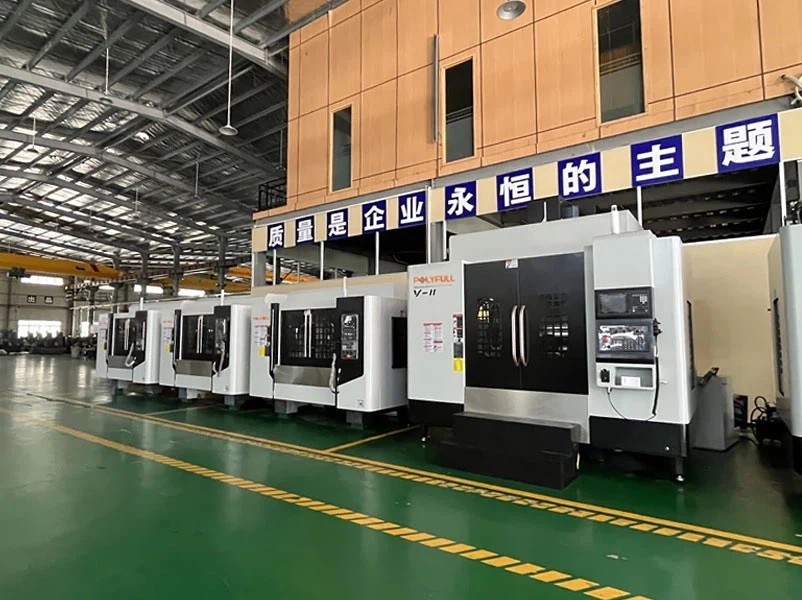
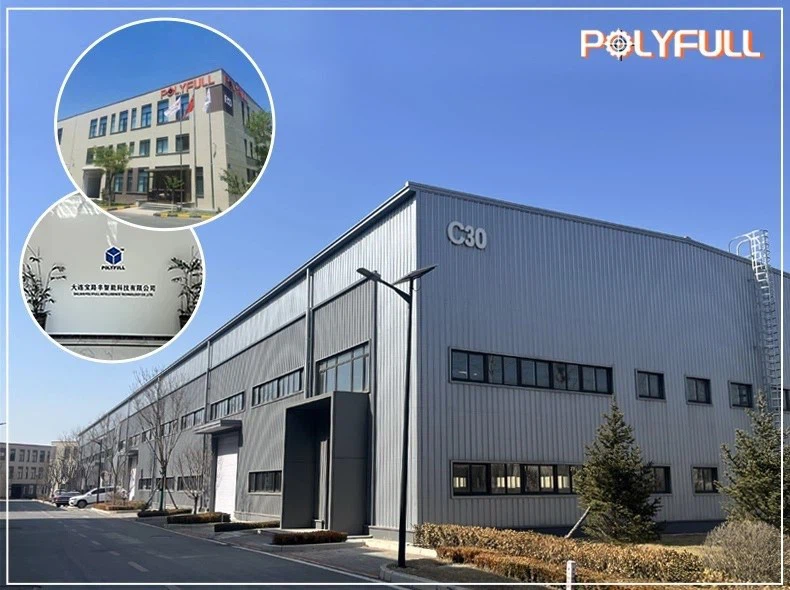
Dalian Polyfull Intelligence Technology Co.,Ltd. is a professional machine tool manufacturing enterprise, the main products include lathe, milling machine, grinding machine, etc., and according to customer needs we also can design and manufacture various special purpose machines, to provide relative technology upgrading and transformation services in machine tool field. Meanwhile we are a company that produces automated robots. We can design,develop, install, test, debug industrial robot, it’s units and related accessories including fixture transmission device, positioning device and control system. We can provide welding robot, slicing robot,painting robot,assemble robot,burnishing robot,handing robot,inspect robot,arc welding robot and so on. We have provided many references for the automation industry in China.
FAQ
We're professional CNC lathe manufacturers and suppliers in China. Please feel free to buy high quality CNC lathe for sale here and get quotation from our factory. For customized service, contact us now.