

As a supplier of Polish Robots, I am often asked about the shock - resistance of these remarkable machines. In this blog, I will delve into the details of what shock - resistance means for Polish Robots, how it is achieved, and why it is crucial in various industrial applications.
Understanding Shock - Resistance in Polish Robots
Shock - resistance refers to a robot's ability to withstand sudden impacts, vibrations, or jolts without suffering significant damage or malfunction. In industrial settings, robots are exposed to a wide range of physical stresses. For example, in a manufacturing plant, a Polish Robot might be handling heavy objects, and there could be accidental collisions during the material transfer process. A palletizing robot, in particular, is constantly lifting and moving heavy pallets, which can lead to sudden jolts if the load is not perfectly balanced.
The shock - resistance of Polish Robots is a result of advanced engineering and the use of high - quality materials. The structural design of these robots is optimized to distribute the force of an impact evenly across the body. This is achieved through the use of strong and flexible frames that can absorb and dissipate energy. For instance, the frames are often made of high - strength alloys that have excellent mechanical properties, such as high yield strength and good ductility.
How Shock - Resistance is Achieved
Structural Design
The design of Polish Robots is based on in - depth research and engineering analysis. Engineers use computer - aided design (CAD) and finite element analysis (FEA) to simulate different impact scenarios. This allows them to identify potential weak points in the robot's structure and make necessary improvements. For example, the joints of the robot are designed to be robust and flexible. They can withstand a certain degree of angular displacement during an impact without breaking.
Material Selection
As mentioned earlier, the choice of materials is crucial for shock - resistance. High - strength steels and aluminum alloys are commonly used in the construction of Polish Robots. These materials offer a good balance between strength and weight. In addition, some components may be coated with special materials to enhance their impact resistance. For example, the outer surface of the robot's body may be coated with a polymer layer that can absorb and dampen the energy of an impact.
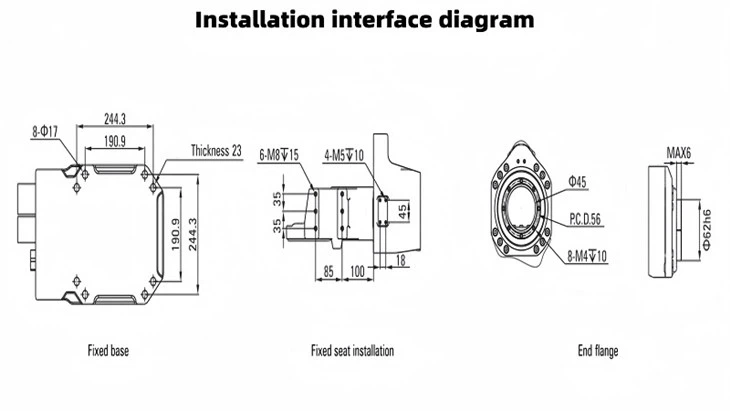
Sensor Technology
Polish Robots are equipped with advanced sensor technology that can detect sudden impacts. These sensors can quickly send signals to the robot's control system, which can then take appropriate actions. For example, if a collision is detected, the robot can immediately stop its movement to prevent further damage. Some sensors can also measure the magnitude and direction of the impact, allowing the control system to adjust the robot's operation accordingly.
Importance of Shock - Resistance in Different Applications
Palletizing Applications
In palletizing operations, Palletizing Robot are constantly lifting and stacking heavy pallets. A sudden shock can occur if the pallet is not placed correctly or if there is an obstruction in the path. A robot with good shock - resistance can continue to operate smoothly even after such an incident. This reduces downtime and maintenance costs. For example, if a palletizing robot is used in a food processing plant, any interruption in the palletizing process can lead to delays in product delivery. A shock - resistant robot ensures the continuous and efficient operation of the production line.

Burnishing Applications
Burnishing Robot are used to polish and finish the surface of various products. During the burnishing process, the robot needs to apply a certain amount of pressure on the workpiece. However, if there is an unexpected change in the surface condition of the workpiece, it can cause a shock to the robot. A shock - resistant burnishing robot can maintain its accuracy and stability, ensuring a high - quality finish. For example, in the automotive industry, burnishing robots are used to polish engine components. Any deviation in the burnishing process can affect the performance of the engine.
Testing and Certification of Shock - Resistance
Polish Robot manufacturers conduct rigorous testing to ensure the shock - resistance of their products. These tests simulate real - world impact scenarios, such as collisions with objects of different masses and velocities. The robots are also tested under different operating conditions, including high - speed movements and heavy loads.
In addition to in - house testing, Polish Robots may also be certified by international standards organizations. These certifications provide an independent verification of the robot's shock - resistance performance. For example, the ISO 10218 standard sets out the safety requirements for industrial robots, including the ability to withstand certain levels of impact.

Factors Affecting Shock - Resistance
Operating Environment
The operating environment can have a significant impact on the shock - resistance of Polish Robots. For example, in a dusty or dirty environment, the accumulation of debris on the robot's joints and sensors can reduce its shock - resistance. Similarly, in a humid environment, corrosion can weaken the robot's structure. Therefore, it is important to choose the right type of robot for the specific operating environment and to carry out regular maintenance.
Load Capacity
The load capacity of the robot also affects its shock - resistance. A robot that is constantly operating at its maximum load capacity is more likely to be affected by shocks. Therefore, it is important to select a robot with an appropriate load capacity for the specific application. For example, if a robot is required to handle heavy objects, it should have a higher load capacity and better shock - resistance.
Conclusion
The shock - resistance of Polish Robots is a critical feature that ensures their reliability and performance in various industrial applications. Through advanced engineering, high - quality materials, and advanced sensor technology, Polish Robots are designed to withstand sudden impacts and vibrations. Whether it is a palletizing robot in a warehouse or a burnishing robot in a manufacturing plant, shock - resistance is essential for continuous and efficient operation.
If you are interested in purchasing Polish Robots for your industrial needs, I encourage you to contact us for more information and to discuss your specific requirements. We can provide you with detailed technical specifications, performance data, and pricing information. Our team of experts is ready to assist you in selecting the right robot for your application and to ensure a smooth procurement process.
References
- ISO 10218 - 1:2011, Robots and robotic devices — Safety requirements for industrial robots — Part 1: Robot.
- "Advanced Materials for Industrial Robots" by Materials Research Journal.
- "Design and Analysis of Shock - Resistant Structures in Robotics" by Journal of Robotics Engineering.