

What is the Rigidity of an Inclined Bed CNC Lathe?
In the realm of CNC machining, the inclined bed CNC lathe stands as a cornerstone tool, widely recognized for its superior performance in various machining operations. At the heart of its outstanding capabilities lies the concept of rigidity. Rigidity is a fundamental characteristic that significantly influences the lathe's precision, stability, and overall machining efficiency. As a reputable inclined bed CNC lathe supplier, we are committed to unveiling the essence of rigidity and its importance in these remarkable machines.
Understanding the Concept of Rigidity
Rigidity in the context of an inclined bed CNC lathe refers to the machine's ability to resist deformation under the action of cutting forces. When the lathe is in operation, the cutting tools exert substantial forces on the workpiece. If the lathe lacks sufficient rigidity, these forces can cause the machine components to deflect, resulting in inaccurate machining dimensions, poor surface finish, and reduced tool life.
A rigid inclined bed CNC lathe can maintain its geometric accuracy and stability during the machining process, ensuring that the cutting forces are evenly distributed and absorbed. This enables the machine to produce high - quality workpieces with tight tolerances and excellent surface quality.
Factors Affecting the Rigidity of Inclined Bed CNC Lathes
Bed Design
The bed is the foundation of an inclined bed CNC lathe. The inclined bed design offers several advantages over the traditional flat - bed design in terms of rigidity. The inclined structure allows for better chip evacuation, which reduces the accumulation of chips around the cutting area. More importantly, the inclined bed provides a more favorable distribution of forces. When cutting forces are applied, the inclined angle enables the forces to be resolved along the direction of the bed's structure, enhancing the overall stability and rigidity of the machine.
For example, our High Speed Slant Bed CNC Lathe features an optimized inclined bed design. The bed is made of high - quality cast iron, which has excellent vibration - damping properties. The ribbed structure of the bed is carefully designed to increase its strength and stiffness, ensuring maximum resistance to deformation under heavy cutting loads.
Main Spindle
The main spindle is another critical component that affects the rigidity of the lathe. A rigid spindle can transmit power effectively from the motor to the cutting tool, while maintaining high accuracy and minimal run - out. High - precision bearings are commonly used in the spindle assembly to support the rotating shaft and reduce friction. The pre - loading of these bearings is carefully adjusted to eliminate any play and ensure a tight fit, which significantly enhances the spindle's rigidity.
In our Integral - bed Hard - track CNC Lathe, the main spindle is engineered with high - quality bearings and a robust housing. The spindle is also dynamically balanced to reduce vibration during high - speed rotation, further improving the machine's rigidity and machining accuracy.
Guide Rails
Guide rails play a crucial role in guiding the movement of the carriage and other components on the lathe. Two common types of guide rails used in inclined bed CNC lathes are hard - track and line - rail.
Hard - track guide rails, as the name suggests, are hardened steel tracks that provide excellent wear resistance and high load - carrying capacity. They are suitable for heavy - duty machining operations where large cutting forces are involved. The contact area between the carriage and the hard - track guide rails is relatively large, which helps to distribute the cutting forces evenly and enhances the overall rigidity of the machine.
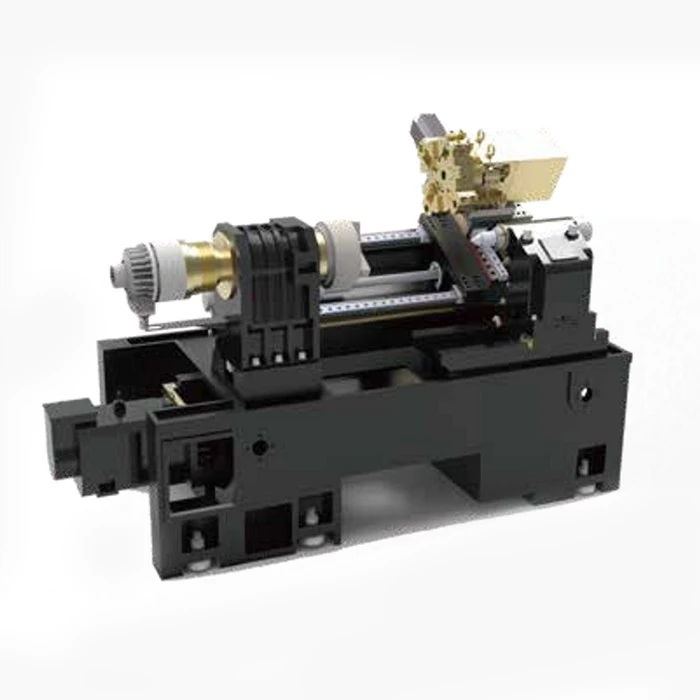
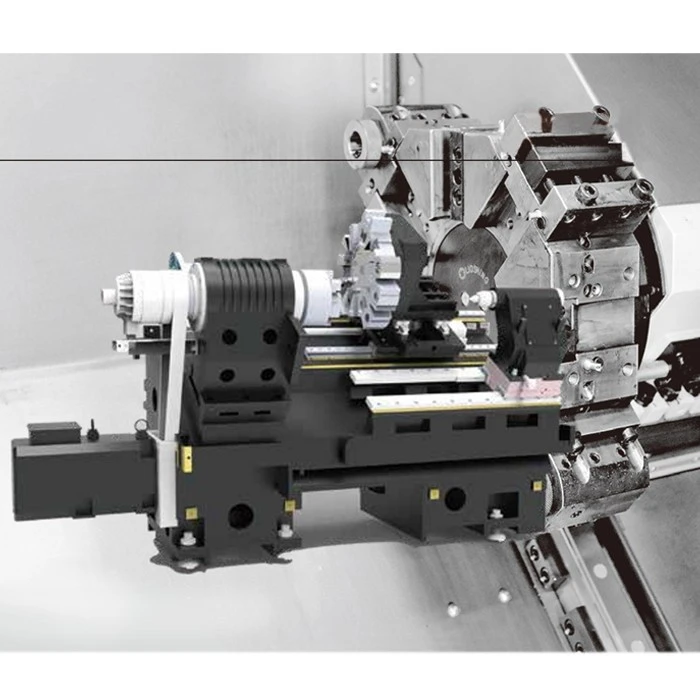
On the other hand, line - rail guide rails consist of linear guides that offer low friction and high - speed movement capabilities. Although they may have a lower load - carrying capacity compared to hard - track guide rails, they can provide better positioning accuracy and rapid response, which is beneficial for high - precision and high - speed machining. Our Inclined - bed line - rail CNC lathe utilizes advanced line - rail technology to ensure precise and efficient machining operations.
Tool Turret
The tool turret is responsible for holding and indexing the cutting tools. A rigid tool turret is essential for maintaining the stability of the cutting process. It should be able to withstand the cutting forces without significant deflection and provide accurate tool positioning. The construction of the tool turret, including the material used and the design of the indexing mechanism, can affect its rigidity. High - quality tool turrets are often made of strong alloys and feature a reliable indexing system to ensure precise and repeatable tool changes.
Importance of Rigidity in Machining Operations
Precision Machining
In precision machining, even the slightest deformation can lead to dimensional inaccuracies in the workpiece. A rigid inclined bed CNC lathe can maintain its accuracy during long - term machining operations, ensuring that the workpieces meet the required tolerances. For industries such as aerospace and medical device manufacturing, where precision is of utmost importance, the rigidity of the lathe is a critical factor in producing high - quality components.
Surface Finish
The surface finish of the machined workpiece is also closely related to the rigidity of the lathe. When the lathe is rigid, the cutting tool can move smoothly and steadily across the workpiece, resulting in a better surface finish. In contrast, a lack of rigidity can cause the tool to vibrate, leaving visible marks on the workpiece surface and reducing its overall quality.
Tool Life
Rigidity can also have a significant impact on tool life. When the lathe is rigid, the cutting forces are evenly distributed, reducing the stress on the cutting tool. This helps to prevent premature wear and breakage of the tool, extending its service life and reducing the cost of tool replacement.
Our Commitment as an Inclined Bed CNC Lathe Supplier
As a leading supplier of inclined bed CNC lathes, we understand the importance of rigidity in these machines. We invest heavily in research and development to continuously improve the rigidity of our products. Our engineering team uses advanced design software and simulation techniques to optimize the structure and components of the lathes, ensuring maximum rigidity and performance.
We also adhere to strict quality control standards throughout the manufacturing process. From the selection of high - quality materials to the final assembly and testing, every step is carefully monitored to ensure that our inclined bed CNC lathes meet the highest levels of rigidity and reliability.
If you are in the market for an inclined bed CNC lathe and are looking for a machine with exceptional rigidity and performance, we invite you to contact us for a detailed discussion. Our team of experts is ready to assist you in choosing the right lathe for your specific machining needs. We look forward to the opportunity to work with you and help you achieve your production goals.
References
- Smith, J. (2020). CNC Machining Handbook. Industrial Press.
- Brown, A. (2019). Advances in CNC Lathe Technology. Machining Today Journal.
- Chen, L. (2021). Rigidity Analysis of Machine Tools. International Journal of Machine Tools and Manufacture.