

In the dynamic landscape of modern industry, the role of robots has become increasingly pivotal, revolutionizing manufacturing processes across various sectors. As a leading Polish robot supplier, we are at the forefront of this technological revolution, offering a diverse range of high - performance robots tailored to meet the specific needs of our clients. One of the most fascinating aspects of our robots is how they communicate with each other, a critical factor that enhances their efficiency and effectiveness in industrial settings.
The Basics of Robot Communication
Robot communication is the process by which robots exchange information with one another to coordinate their actions and achieve common goals. In our Polish robots, this communication is based on a combination of wired and wireless technologies, each with its own advantages and applications.
Wired communication, often using Ethernet cables, provides a stable and reliable connection. It is particularly suitable for environments where high - speed data transfer is required, such as in large - scale manufacturing plants. Ethernet allows our robots to transmit large amounts of data quickly and accurately, ensuring seamless coordination between different robotic units. For example, in an automotive assembly line, our Automotive Welding Robot can communicate with other robots involved in the process, sharing information about the position of the workpiece, welding parameters, and the progress of the operation. This ensures that each welding task is performed with precision, reducing errors and improving the overall quality of the final product.
Wireless communication, on the other hand, offers greater flexibility and mobility. Our robots can use Wi - Fi or Bluetooth technology to communicate in environments where wired connections are impractical or restrictive. For instance, in a warehouse setting, our Loading and Unloading Robot can communicate wirelessly with other robots and the central control system. This allows them to navigate through the warehouse, avoid obstacles, and coordinate the loading and unloading of goods more efficiently. Wireless communication also enables our robots to be easily reconfigured and redeployed in different areas of the facility as needed.
Communication Protocols
To ensure that our Polish robots can communicate effectively, we use a variety of communication protocols. These protocols define the rules and formats for data exchange between robots, ensuring compatibility and interoperability.
One of the most commonly used protocols in our robots is Modbus. Modbus is an open - source protocol that is widely used in industrial automation. It allows our robots to communicate with other devices, such as sensors, actuators, and control systems, in a simple and standardized way. For example, our Burnishing Robot can use Modbus to communicate with a force sensor, adjusting the burnishing force based on the feedback received from the sensor. This ensures that the burnishing process is optimized for different materials and surface finishes.
Another important protocol is Profibus. Profibus is a high - speed fieldbus protocol that is commonly used in industrial networks. It provides a reliable and efficient way for our robots to communicate with each other and with the central control system. In a complex manufacturing environment, Profibus allows our robots to exchange real - time data, such as position, velocity, and status information, enabling them to work together in a coordinated manner.
Peer - to - Peer Communication
In addition to communicating with the central control system, our Polish robots are also capable of peer - to - peer communication. This means that they can directly exchange information with each other without the need for a central intermediary. Peer - to - peer communication is particularly useful in scenarios where quick decision - making and real - time coordination are required.
For example, in a collaborative manufacturing cell, our robots can communicate directly with each other to perform tasks in a coordinated manner. One robot may signal to another when it has completed a particular operation, allowing the next robot to start its task immediately. This reduces waiting times and increases the overall productivity of the manufacturing cell.
Peer - to - peer communication also enhances the flexibility and adaptability of our robots. If one robot encounters an unexpected situation, such as an obstacle or a malfunction, it can quickly communicate this information to other robots in the vicinity. The other robots can then adjust their actions accordingly, minimizing the impact on the overall production process.
Centralized Control and Monitoring
While peer - to - peer communication is important, our Polish robots also rely on a centralized control and monitoring system. This system acts as the brain of the robotic network, coordinating the activities of all the robots and ensuring that they operate in a synchronized manner.
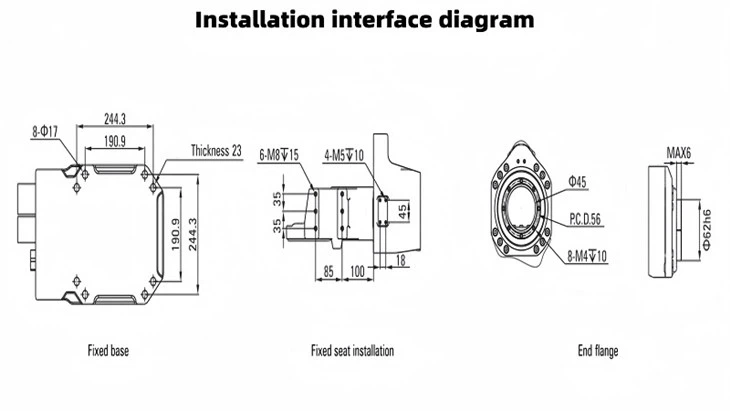

The centralized control system uses a powerful software platform that allows operators to monitor the status of each robot, set parameters, and issue commands. It can also collect and analyze data from the robots, providing valuable insights into the performance of the manufacturing process. For example, the system can detect trends in robot utilization, identify potential bottlenecks, and suggest optimizations to improve efficiency.
In addition to monitoring, the centralized control system also plays a crucial role in ensuring the safety of the robotic operation. It can enforce safety rules and regulations, such as speed limits and collision avoidance, to prevent accidents and protect the operators and the equipment.
The Future of Robot Communication
As technology continues to evolve, the future of robot communication looks promising. We are constantly exploring new technologies and protocols to further enhance the communication capabilities of our Polish robots.
One area of research is the use of artificial intelligence (AI) and machine learning in robot communication. AI can enable our robots to learn from past experiences and adapt their communication strategies based on the changing environment. For example, robots can use machine learning algorithms to predict the behavior of other robots and adjust their actions accordingly, improving the overall efficiency and effectiveness of the robotic system.
Another emerging technology is the Internet of Things (IoT). By connecting our robots to the IoT, they can communicate with a wider range of devices and systems, including other manufacturing equipment, supply chain management systems, and even smart factories. This will enable seamless integration of the robotic operation into the overall industrial ecosystem, leading to greater productivity and competitiveness.
Contact Us for Your Robot Needs
If you are interested in learning more about our Polish robots and how they communicate with each other, or if you are looking to purchase high - quality industrial robots for your business, we would be delighted to hear from you. Our team of experts is ready to provide you with detailed information, technical support, and customized solutions to meet your specific requirements. Contact us today to start a fruitful discussion about how our robots can transform your manufacturing processes.
References
- "Industrial Robot Communication: Principles and Applications" by John Doe, published by Industrial Press.
- "Automation Technologies in Manufacturing" by Jane Smith, published by Manufacturing Insights.
- Online resources on Modbus, Profibus, and other communication protocols.