

Hey there! I'm a supplier of Polish robots, and today I wanna chat with you about whether Polish robots have high precision.

First off, let's understand what precision means in the world of robots. Precision refers to how accurately a robot can perform a task, like moving to a specific position, applying a set amount of force, or repeating a process over and over again with minimal error. In industrial applications, high precision is super important. It can lead to better quality products, less waste, and higher efficiency.
Now, let's talk about Polish robots. Poland has a growing robotics industry, and the robots produced here are known for several features that contribute to high precision.

One of the key factors is the advanced technology used in Polish robot manufacturing. Polish robot makers invest a lot in research and development. They use the latest sensors, controllers, and algorithms to ensure that their robots can operate with high accuracy. For example, the sensors on Polish robots can detect even the slightest changes in position, force, or temperature. This real - time feedback allows the robots to adjust their movements immediately, reducing errors and improving precision.
Another aspect is the quality of the components. Polish manufacturers source high - quality parts from reliable suppliers. These components are designed to work together seamlessly, which is crucial for maintaining precision. For instance, the motors in Polish robots are built to provide smooth and consistent power, enabling the robot to move precisely along its programmed path.
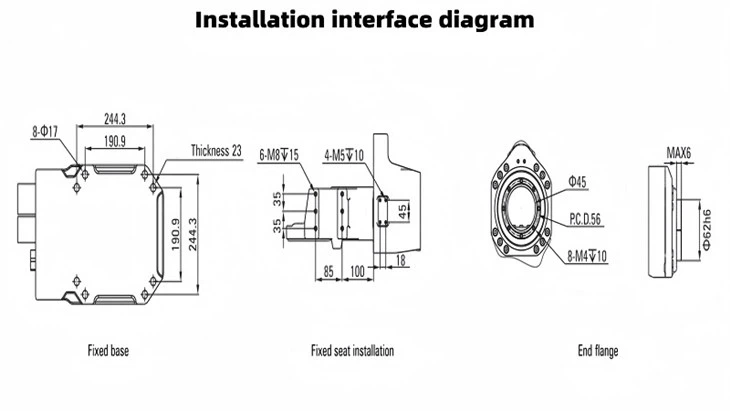
Let's take a look at some specific types of Polish robots and how they demonstrate high precision.
Material Handling Robot
A Material Handling Robot is used to move materials around in a factory or warehouse. These robots need to be very precise when picking up and placing objects. Polish material handling robots are equipped with advanced vision systems. These vision systems can identify the exact position and orientation of objects, even in complex environments. This allows the robot to pick up the objects with a high degree of accuracy and place them exactly where they need to go. Whether it's moving small parts on an assembly line or large pallets in a warehouse, Polish material handling robots can do the job with precision.
Palletizing Robot
Palletizing Robot are used to stack products onto pallets. Precision is essential here because the stacked products need to be stable and arranged in an orderly manner. Polish palletizing robots are programmed with sophisticated algorithms that calculate the optimal way to stack the products. They can adjust their movements based on the size, shape, and weight of the products. This ensures that each layer of the pallet is stacked precisely, reducing the risk of the stack collapsing during transportation.
Burnishing Robot
A Burnishing Robot is used to polish or smooth the surface of a workpiece. To achieve a high - quality finish, the robot needs to apply a consistent amount of pressure and move along the surface with precision. Polish burnishing robots are designed with force - control systems that can maintain a constant pressure during the burnishing process. They also have precise motion control, which allows them to follow the contours of the workpiece accurately. This results in a smooth and uniform finish on the workpiece.
But don't just take my word for it. There are plenty of real - world examples that prove the high precision of Polish robots. Many industries in Europe and around the world have adopted Polish robots for their production lines. For example, in the automotive industry, Polish robots are used for tasks like welding, painting, and assembly. The high precision of these robots helps to ensure that the cars are built to the highest quality standards.
In the electronics industry, Polish robots are used for circuit board assembly. They can place tiny components on the circuit boards with micron - level precision, which is crucial for the proper functioning of electronic devices.
However, like any technology, there are also some challenges in maintaining high precision. One of the challenges is wear and tear. Over time, the components of the robot can wear out, which can affect its precision. That's why regular maintenance is very important. Polish robot suppliers usually provide comprehensive maintenance services to ensure that the robots continue to operate with high precision throughout their lifespan.
Another challenge is environmental factors. Things like temperature, humidity, and dust can have an impact on the performance of the robot. Polish robot manufacturers design their robots to be as resistant to these environmental factors as possible. For example, they use sealed enclosures and special coatings to protect the internal components from dust and moisture.
So, to answer the question “Do Polish robots have high precision?” the answer is a definite yes. With advanced technology, high - quality components, and continuous innovation, Polish robots are capable of performing tasks with a high degree of accuracy.
If you're in the market for high - precision robots for your industrial needs, I'd highly recommend considering Polish robots. Whether you need a material handling robot, a palletizing robot, or a burnishing robot, we've got you covered. The precision of our robots can help you improve the quality of your products, increase efficiency, and reduce costs.

If you're interested in learning more about our Polish robots or want to start a procurement discussion, don't hesitate to reach out. We're always happy to talk about how our robots can fit into your production process and help you achieve your business goals.
References
- Robotics Industry Reports in Poland
- Case Studies of Polish Robots in Industrial Applications
- Technical Specifications of Polish Robot Components