

Can a Vertical Machining Center be Used for Machining Large - Sized Workpieces?
As a supplier of vertical machining centers, I often encounter questions from customers about the suitability of these machines for machining large - sized workpieces. In this blog post, I'll delve into this topic, exploring the capabilities, limitations, and considerations when using a vertical machining center for large - scale machining.
Understanding Vertical Machining Centers
A vertical machining center (VMC) is a type of computer numerical control (CNC) machine tool where the spindle axis is vertically oriented. This design allows for easy access to the workpiece from above, making it ideal for a wide range of machining operations such as milling, drilling, tapping, and boring. VMCs come in various sizes and configurations, from small benchtop models suitable for prototyping and light - duty work to large, heavy - duty machines designed for high - volume production.
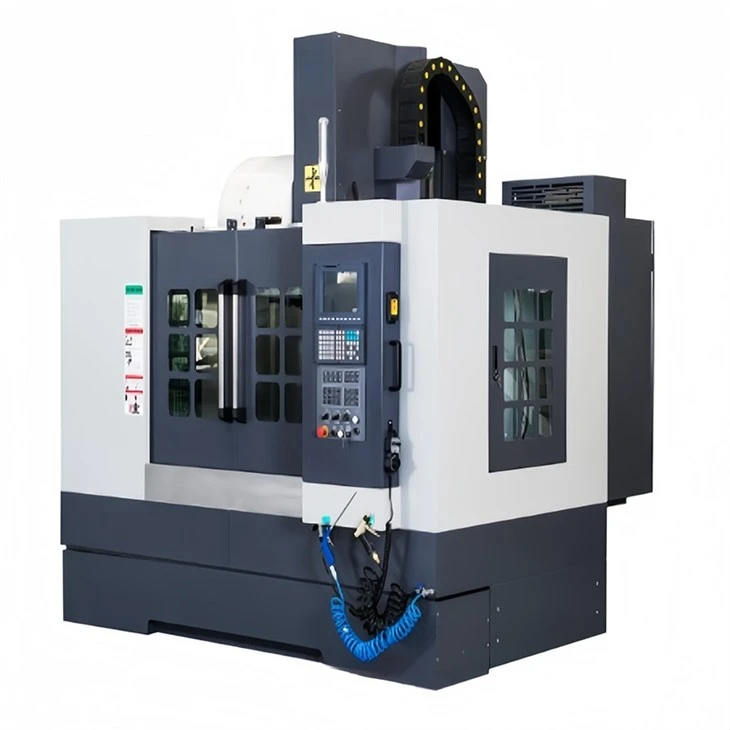

Capabilities of Vertical Machining Centers for Large - Sized Workpieces
- Size and Capacity: Many modern vertical machining centers are designed with large worktables and high - capacity spindles that can handle relatively large workpieces. For example, our Large Vertical Machining Centers are equipped with spacious work areas that can accommodate workpieces of significant dimensions. These machines are built with robust structures to support the weight of large parts during machining, ensuring stability and accuracy.
- Versatility: Vertical machining centers offer a high degree of versatility, which is beneficial when machining large workpieces. They can perform multiple operations in a single setup, reducing the need for workpiece repositioning and minimizing errors. With the ability to use a variety of cutting tools, VMCs can machine complex geometries on large parts, including contours and pockets.
- Precision: Despite the size of the workpiece, vertical machining centers are capable of achieving high levels of precision. Advanced CNC controls and servo systems ensure accurate positioning of the cutting tool, resulting in tight tolerances and excellent surface finishes. This precision is crucial when machining large components for industries such as aerospace, automotive, and heavy machinery.
Limitations and Challenges
- Workpiece Accessibility: One of the main challenges when using a vertical machining center for large - sized workpieces is limited accessibility. Since the spindle is vertically oriented, it may be difficult to reach certain areas of the workpiece, especially those located deep within a cavity or on the side of a large part. This can require the use of special tooling or multiple setups, which can increase machining time and complexity.
- Weight and Stability: While modern VMCs are designed to handle large workpieces, extremely heavy parts can pose challenges to the machine's stability. Excessive weight can cause the machine to vibrate during machining, leading to poor surface finishes and reduced accuracy. It's important to ensure that the workpiece is properly supported and balanced on the worktable to minimize these issues.
- Cutting Forces: Machining large workpieces often generates significant cutting forces, which can put stress on the machine's components. The spindle, toolholder, and worktable need to be strong enough to withstand these forces without deflection. In some cases, additional support or reinforcement may be required to prevent damage to the machine.
Considerations for Machining Large - Sized Workpieces
- Machine Selection: When choosing a vertical machining center for large - sized workpieces, it's essential to consider the machine's specifications, including the worktable size, spindle power, and travel distances. Our 3 - Axis Vertical Machining Center is a popular choice for machining large parts due to its generous work area and high - performance spindle.
- Tooling: Selecting the right cutting tools is crucial for successful machining of large workpieces. Tools should be designed to withstand the high cutting forces and long machining times associated with large - scale operations. Solid carbide end mills, indexable inserts, and long - reach toolholders are commonly used for machining large parts.
- Fixture Design: Proper fixture design is essential to ensure the stability and accuracy of the workpiece during machining. Fixtures should securely hold the workpiece in place while allowing easy access for the cutting tool. Custom - designed fixtures may be required for complex or irregularly shaped large workpieces.
- Machining Strategy: Developing an effective machining strategy is key to optimizing the performance of a vertical machining center when working with large - sized workpieces. This may involve using roughing and finishing passes, optimizing cutting parameters such as feed rate and spindle speed, and minimizing the number of tool changes.
Conclusion
In conclusion, a vertical machining center can be used for machining large - sized workpieces, but it's important to understand its capabilities, limitations, and the necessary considerations. With the right machine selection, tooling, fixture design, and machining strategy, a VMC can provide accurate and efficient machining of large parts. Our company offers a range of vertical machining centers, including Linear Rail CNC Machine, that are suitable for various applications, including large - scale machining.
If you're interested in learning more about our vertical machining centers or have specific requirements for machining large - sized workpieces, we encourage you to contact us for a consultation. Our team of experts is ready to assist you in finding the right solution for your machining needs.
References
- "CNC Machining Handbook" by John A. Schey
- "Modern Machining Technology" by Robert L. Norton
- Industry whitepapers on vertical machining center applications for large - sized workpieces