

1. Application in palletizing
In terms of palletizing in all kinds of factories, highly automated robots are widely used, manual palletizing work intensity is high, labor-intensive, employees not only need to bear huge pressure, but also low work efficiency. According to the characteristics of the transported objects and the places where the transported objects are classified, the handling robot can carry out efficient classification and handling on the basis of keeping its shape and the nature of the object unchanged, so that the packing equipment can complete the palletizing task of hundreds of pieces per hour. It plays an important role in the loading and unloading of production lines and the handling of containers.
2. Application in welding
Welding robots are mainly responsible for welding work, and different industrial types have different industrial needs, so common welding robots are spot welding robots, arc welding robots, laser robots, etc. The automobile manufacturing industry is the most widely used industry of welding robots, and it has incomparable advantages in welding difficulty, welding quantity, and welding quality.
3. Application in assembly
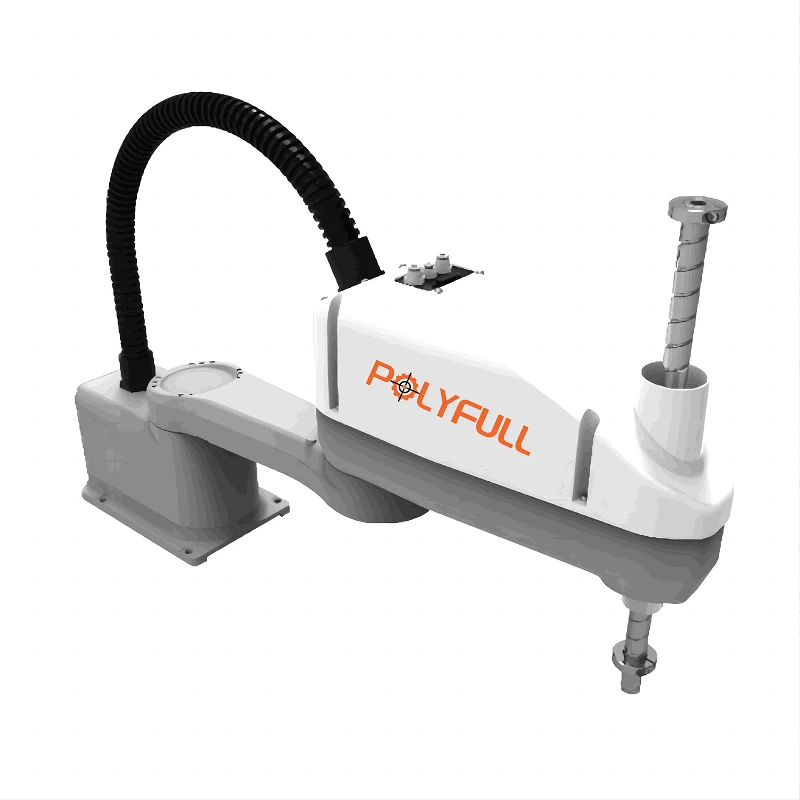
In industrial production, the assembly of parts is a huge amount of work, requiring a large amount of labor, and the former human assembly is gradually replaced by industrial robots because of high error rate and low efficiency. The research and development of assembly robots combines a variety of technologies, including communication technology, automatic control, optical principles, microelectronics technology, etc. According to the assembly process, R&D personnel write appropriate programs and apply them to specific assembly work. The biggest feature of the assembly robot is high installation accuracy, flexibility and durability. Because the assembly work is complex and delicate, we choose assembly robots for the installation of electronic parts and delicate parts of automobiles.
4. Application in detection
The robot has multi-dimensional additional functions. It can replace the work of staff in special positions, such as detection in high-risk areas such as nuclear contaminated areas, toxic areas, nuclear contaminated areas, and high-risk unknown areas. There are also places that cannot be specifically reached by humans, such as the detection of sick parts, the detection of industrial defects, and the detection of life at the earthquake relief site.