

Hey there! As a supplier of Flat Bed CNC Lathes, I often get asked about the kinds of cutting tools used in these machines. So, I thought I'd share some insights on this topic.
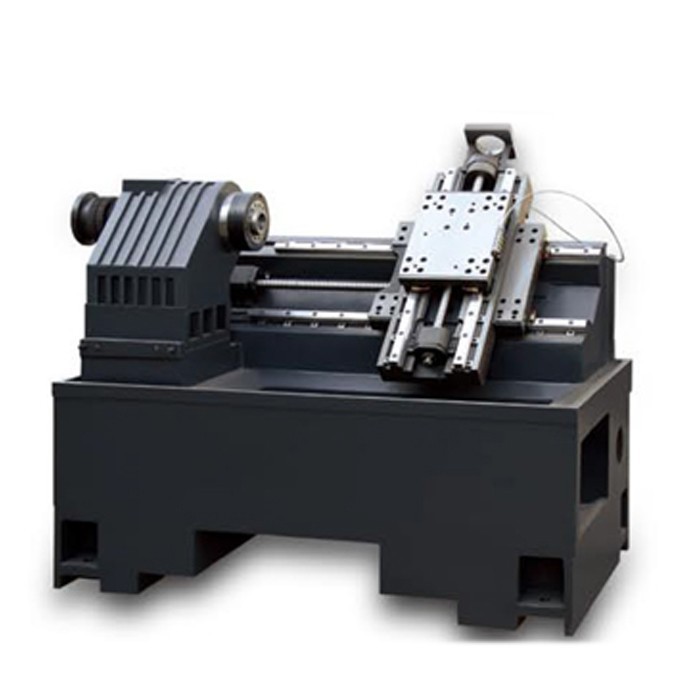
Let's start by understanding what a Flat Bed CNC Lathe is. It's a type of computer numerical control (CNC) lathe with a flat bed design. There are different models available, like the Hard Rail Flat Bed CNC Lathe and the Flat Bed Linear Guide Way CNC Lathe. These lathes are used for a variety of machining operations, and the choice of cutting tools plays a crucial role in the quality and efficiency of the work.
Turning Inserts
One of the most common types of cutting tools used in Flat Bed CNC Lathes is turning inserts. These are small, replaceable cutting tips that are mounted on a tool holder. Turning inserts come in different shapes, sizes, and materials, each designed for specific machining tasks.
- Carbide Inserts: Carbide is a popular material for turning inserts because it's extremely hard and wear-resistant. It can handle high cutting speeds and feeds, making it suitable for roughing and finishing operations on a wide range of materials, including steel, stainless steel, and cast iron. For example, when machining a large steel shaft on our Hard Rail CNC Lathe, carbide inserts can quickly remove material and leave a smooth surface finish.
- Ceramic Inserts: Ceramic inserts are even harder than carbide and can withstand higher temperatures. They're ideal for high-speed machining of hard materials, such as hardened steels and superalloys. However, they're also more brittle, so they need to be used with care to avoid chipping or breaking.
- CBN (Cubic Boron Nitride) Inserts: CBN inserts are the go-to choice for machining extremely hard materials, like hardened steels with a hardness of over 45 HRC. They have excellent wear resistance and can maintain a sharp cutting edge for a long time, resulting in high-quality surface finishes and longer tool life.
Boring Bars
Boring bars are used to enlarge existing holes or create internal cylindrical features in a workpiece. In a Flat Bed CNC Lathe, boring bars are typically mounted in the tool turret and can be programmed to move along the Z and X axes to achieve the desired bore diameter and depth.
- Solid Carbide Boring Bars: These are made from a single piece of carbide and offer high rigidity and precision. They're suitable for boring small to medium-sized holes with tight tolerances. Solid carbide boring bars can also be used for interrupted cuts, as they can withstand the shock and vibration without losing accuracy.
- Damped Boring Bars: When boring deep holes or using long overhangs, vibration can become a problem. Damped boring bars are designed to reduce vibration by incorporating a damping mechanism inside the bar. This helps to improve surface finish and extend tool life, especially when machining difficult-to-cut materials.
Drill Bits
Drill bits are used to create holes in a workpiece. In a Flat Bed CNC Lathe, drill bits can be used for both center drilling and through-hole drilling operations.
- Twist Drill Bits: Twist drill bits are the most common type of drill bits used in CNC lathes. They have a helical flute design that helps to remove chips from the hole as the drill rotates. Twist drill bits come in different sizes and materials, such as high-speed steel (HSS) and carbide. HSS drill bits are suitable for general-purpose drilling on a variety of materials, while carbide drill bits are better for drilling hard materials at high speeds.
- Gun Drill Bits: Gun drill bits are used for deep-hole drilling operations. They have a single flute and a coolant hole that allows coolant to be delivered directly to the cutting edge. This helps to keep the drill bit cool and flush out chips, resulting in better hole quality and longer tool life.
Threading Tools
Threading tools are used to create threads on a workpiece. In a Flat Bed CNC Lathe, threading can be done using single-point threading tools or multi-point threading inserts.
- Single-Point Threading Tools: Single-point threading tools are used to cut threads one pass at a time. They offer high precision and can be used to create a variety of thread forms, including metric, imperial, and pipe threads. Single-point threading tools require careful setup and programming to ensure accurate thread pitch and depth.
- Multi-Point Threading Inserts: Multi-point threading inserts are designed to cut multiple threads simultaneously, which can significantly reduce machining time. They're available in different thread forms and sizes and are easy to install and use. However, they may not be as precise as single-point threading tools for some applications.
Grooving and Parting Tools
Grooving and parting tools are used to create grooves and cut off workpieces from the bar stock. In a Flat Bed CNC Lathe, grooving and parting tools are typically mounted in the tool turret and can be programmed to move along the X axis to achieve the desired groove width and depth.

- Carbide Grooving Inserts: Carbide grooving inserts are similar to turning inserts but are designed specifically for grooving operations. They come in different shapes and sizes, each designed for specific groove widths and depths. Carbide grooving inserts can handle high cutting speeds and feeds, making them suitable for both roughing and finishing operations.
- Parting Blades: Parting blades are used to cut off workpieces from the bar stock. They're available in different thicknesses and widths, depending on the diameter of the workpiece and the desired cut-off length. Parting blades need to be sharp and have good chip control to ensure a clean cut and prevent the workpiece from deforming.
Choosing the Right Cutting Tools
Choosing the right cutting tools for a Flat Bed CNC Lathe depends on several factors, including the material being machined, the desired surface finish, the machining operation, and the machine's capabilities. Here are some tips to help you make the right choice:
- Understand the Material: Different materials require different cutting tools. For example, soft materials like aluminum can be machined with high-speed steel tools, while hard materials like titanium require carbide or ceramic tools.
- Consider the Machining Operation: The type of machining operation, such as turning, boring, drilling, or threading, will also determine the type of cutting tool needed. Make sure to choose a tool that is specifically designed for the operation you're performing.
- Look at the Surface Finish Requirements: If you need a high-quality surface finish, you may need to use a finishing insert or a tool with a sharp cutting edge. On the other hand, if you're just roughing out a workpiece, a more aggressive tool may be suitable.
- Check the Machine's Capabilities: Make sure the cutting tools you choose are compatible with your Flat Bed CNC Lathe. Consider the machine's spindle speed, feed rate, and power requirements when selecting cutting tools.
Conclusion
In conclusion, the choice of cutting tools in a Flat Bed CNC Lathe is crucial for achieving high-quality machining results. Whether you're turning, boring, drilling, threading, or grooving, there's a wide range of cutting tools available to suit your needs. By understanding the different types of cutting tools and how to choose the right ones, you can improve the efficiency and productivity of your machining operations.
If you're in the market for a Flat Bed CNC Lathe or need advice on choosing the right cutting tools, feel free to get in touch with us. We're here to help you find the best solutions for your machining needs.
References
- "CNC Machining Handbook" by Peter Smid
- "Metal Cutting Principles" by Paul A. Koenigsberger and David B. Tlusty