

In the field of precision manufacturing, Linear Rail CNC machines have revolutionized the way we approach various machining tasks. As a leading supplier of Linear Rail CNC equipment, I've witnessed firsthand the critical role that motor torque plays in the performance of these machines. Today, I'd like to delve into the concept of motor torque in Linear Rail CNCs, exploring its significance, how it impacts machining operations, and what factors to consider when selecting the appropriate torque for your specific needs.

Understanding Torque in the Context of Linear Rail CNCs
Torque, in simple terms, is a measure of the rotational force that a motor can exert. In a Linear Rail CNC machine, motors are responsible for driving the movement of the linear rails, which in turn control the position and movement of the cutting tool or workpiece. The amount of torque a motor can produce directly affects the machine's ability to perform tasks such as cutting, drilling, and milling with precision and efficiency.
When a CNC machine is in operation, the motor must overcome various forces, including friction in the linear rails, the inertia of the moving components, and the cutting forces generated during machining. A motor with sufficient torque can ensure smooth and accurate movement, even under heavy loads or when performing complex machining operations.
The Significance of Torque in Machining Performance
Precision and Accuracy
One of the primary benefits of having adequate torque in a Linear Rail CNC machine is the ability to achieve high levels of precision and accuracy. During machining, the cutting tool must move along the programmed path with minimal deviation. A motor with low torque may struggle to maintain the desired speed and position, leading to inaccuracies in the finished product. On the other hand, a motor with sufficient torque can provide the necessary power to drive the linear rails smoothly, ensuring that the cutting tool follows the programmed path precisely.
Material Removal Rate
The material removal rate (MRR) is an important factor in machining efficiency. It refers to the volume of material that can be removed from the workpiece per unit of time. A motor with higher torque can drive the cutting tool at a faster speed and with greater force, allowing for a higher MRR. This means that more material can be removed in less time, increasing productivity and reducing machining costs.
Surface Finish
The surface finish of the machined part is also affected by the motor torque. A smooth and even surface finish is often desired in many applications, especially those where aesthetics or functionality are important. A motor with insufficient torque may cause the cutting tool to chatter or vibrate during machining, resulting in a poor surface finish. In contrast, a motor with sufficient torque can provide a stable and consistent cutting force, leading to a smoother surface finish.
Factors Affecting Torque Requirements
Workpiece Material
The type of material being machined is one of the most significant factors affecting torque requirements. Different materials have different cutting properties, such as hardness, toughness, and ductility. Harder materials, such as steel or titanium, require more torque to cut through compared to softer materials, such as aluminum or plastic. When selecting a Linear Rail CNC machine, it's important to consider the types of materials you'll be working with and choose a motor with sufficient torque to handle those materials.
Cutting Tool Geometry
The geometry of the cutting tool also plays a role in determining the torque requirements. Tools with larger diameters or more complex geometries generally require more torque to operate effectively. For example, a large-diameter end mill or a drill bit with a high helix angle may require more torque to cut through the material compared to a smaller-diameter tool.
Machining Operations
The type of machining operation being performed can also affect the torque requirements. Operations such as roughing, which involve removing large amounts of material quickly, typically require more torque than finishing operations, which focus on achieving a smooth surface finish. Additionally, operations that require high feed rates or deep cuts may also require a motor with higher torque.
Selecting the Right Motor Torque for Your Linear Rail CNC
When selecting a Linear Rail CNC machine, it's important to choose a motor with the appropriate torque for your specific needs. Here are some steps to help you make the right decision:
Analyze Your Machining Requirements
Start by analyzing your machining requirements, including the types of materials you'll be working with, the size and complexity of the parts you'll be machining, and the desired surface finish. This will give you a better understanding of the torque requirements for your specific applications.
Consider the Machine's Specifications
Next, consider the specifications of the Linear Rail CNC machine you're interested in. Look for information about the motor torque rating, as well as other important factors such as the maximum feed rate, spindle speed, and power consumption. Make sure that the machine's torque rating is sufficient to handle your machining requirements.
Consult with a Professional
If you're unsure about which motor torque is right for your needs, it's a good idea to consult with a professional. As a supplier of Linear Rail CNC machines, I have extensive experience in helping customers select the right equipment for their applications. I can provide you with personalized advice and recommendations based on your specific requirements.
Our Product Offerings
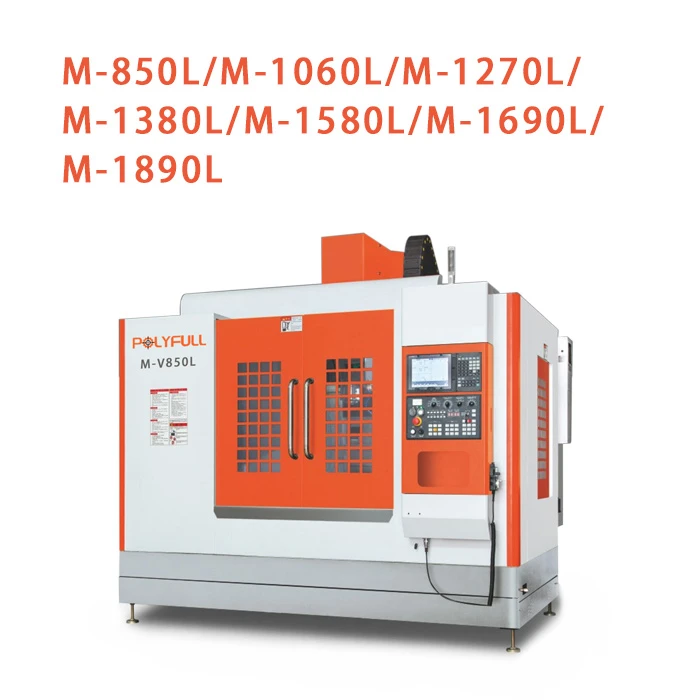
At our company, we offer a wide range of Linear Rail CNC machines with different motor torque ratings to meet the diverse needs of our customers. Our machines are designed to provide high precision, efficiency, and reliability, making them suitable for a variety of machining applications.
One of our popular products is the High Rigidity 2-Wire 1-Hard Machining Center. This machine features a powerful motor with high torque, allowing for smooth and accurate movement of the linear rails. It is ideal for machining hard materials such as steel and titanium, and it can achieve high levels of precision and surface finish.
Another product we offer is the High-speed Drilling and Tapping Machine. This machine is designed for high-speed drilling and tapping operations, and it features a motor with sufficient torque to handle the cutting forces generated during these operations. It can provide fast and accurate drilling and tapping, increasing productivity and reducing cycle times.
We also have the Highly rigid 3-axis vertical machining center, which is suitable for a wide range of machining applications. This machine has a robust structure and a motor with high torque, ensuring stable and reliable performance even under heavy loads.
Conclusion
In conclusion, torque is a critical factor in the performance of Linear Rail CNC machines. A motor with sufficient torque can ensure smooth and accurate movement, high precision and accuracy, a high material removal rate, and a good surface finish. When selecting a Linear Rail CNC machine, it's important to consider your machining requirements, the machine's specifications, and consult with a professional if necessary.
As a leading supplier of Linear Rail CNC machines, we are committed to providing our customers with high-quality equipment and excellent service. If you're interested in learning more about our products or have any questions about motor torque in Linear Rail CNC machines, please don't hesitate to contact us. We'll be happy to assist you in finding the right solution for your machining needs.
References
- "CNC Machining Handbook" by Oberg, Jones, and Horton
- "Machining Fundamentals" by Stephen H. Heller
- "Manufacturing Engineering and Technology" by Serope Kalpakjian and Steven R. Schmid