

Hey there! As a supplier of Vertical Machining Centers, I often get asked about the spindle nose configuration of these machines. It's a crucial aspect that can significantly impact the performance and capabilities of a vertical machining center. So, let's dive right in and explore what the spindle nose configuration is all about.
First off, what exactly is the spindle nose? Well, it's the part of the spindle where the tool holder is attached. Think of it as the interface between the machine and the cutting tool. The spindle nose configuration determines the type of tool holders that can be used, the size and shape of the tools that can be accommodated, and the overall rigidity and precision of the machining process.
There are several different types of spindle nose configurations commonly used in vertical machining centers. One of the most popular is the CAT (Conical Automatic Tooling) configuration. CAT spindles use a tapered interface to secure the tool holder. The taper angle is typically 7:24, which means that for every 24 units of length along the taper, there is a 7-unit change in diameter. This design provides a strong and reliable connection between the spindle and the tool holder, allowing for high torque transmission and accurate tool positioning.
Another common spindle nose configuration is the BT (Big-Plus) configuration. The BT spindle is similar to the CAT spindle in that it also uses a 7:24 taper, but it has an additional contact surface at the flange of the tool holder. This extra contact point helps to increase the rigidity of the tool holder-spindle interface, reducing vibration and improving machining accuracy. The BT configuration is often preferred for high-speed and high-precision machining applications.
Then there's the HSK (Hohlschaftkegel) configuration. Unlike the CAT and BT spindles, which use a tapered interface, the HSK spindle uses a hollow-shank taper design. The HSK tool holder has a short, thick taper with a 1:10 ratio, and it is held in place by a drawbar that pulls the tool holder into the spindle. The HSK configuration offers several advantages, including high-speed capabilities, excellent balance, and improved tool change times. It's commonly used in high-speed machining and precision machining operations.
So, how do you choose the right spindle nose configuration for your vertical machining center? Well, it depends on several factors. One of the most important factors is the type of machining operations you'll be performing. If you're doing mostly heavy-duty machining with large cutting tools, a CAT or BT spindle might be a good choice. These spindles can handle high torque and provide a stable platform for roughing operations. On the other hand, if you're doing high-speed machining or precision finishing work, an HSK spindle might be more suitable. The HSK spindle's high-speed capabilities and excellent balance make it ideal for these types of applications.
Another factor to consider is the compatibility of the spindle nose configuration with your existing tooling. If you already have a set of tool holders in a particular configuration, it might make sense to choose a vertical machining center with the same spindle nose configuration to avoid having to purchase new tooling.
The cost is also an important consideration. Different spindle nose configurations can vary in price, with the HSK configuration generally being more expensive than the CAT or BT configurations. You'll need to weigh the benefits of each configuration against the cost to determine which one is the best fit for your budget.
At our company, we offer a wide range of vertical machining centers with different spindle nose configurations to meet the diverse needs of our customers. Whether you're looking for a Large Vertical Machining Centers for heavy-duty machining or a Highly rigid 3-axis vertical machining center for precision work, we've got you covered. We also have Linear Rail CNC Lathe options available for those who need a more versatile machining solution.
Our team of experts is always on hand to help you choose the right vertical machining center and spindle nose configuration for your specific requirements. We can provide you with detailed information about the features and benefits of each configuration, as well as offer advice on tooling selection and maintenance.
If you're in the market for a vertical machining center, we'd love to hear from you. Contact us today to start the conversation about your machining needs. We're confident that we can provide you with a high-quality vertical machining center that will meet your expectations and help you take your machining operations to the next level.
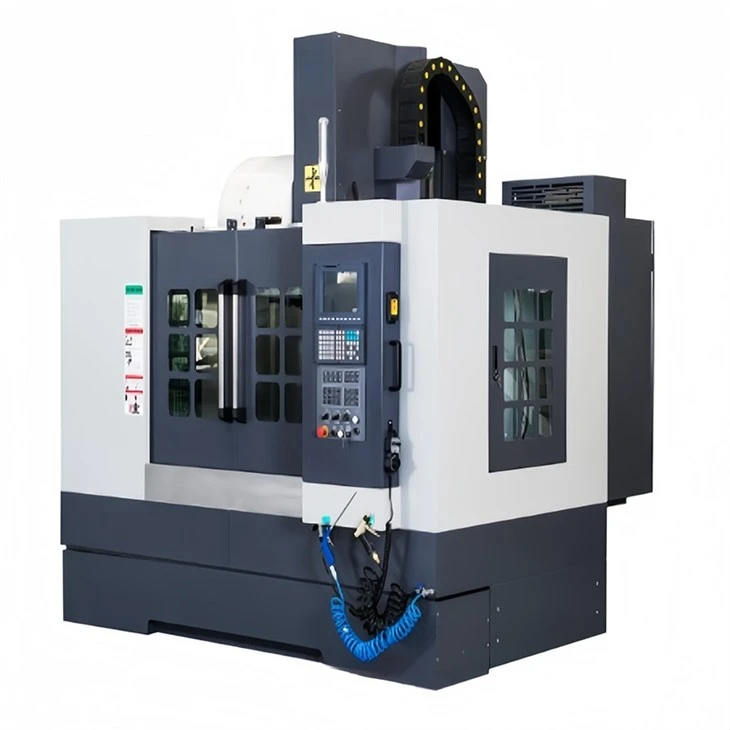

In conclusion, the spindle nose configuration of a vertical machining center is a critical factor that can have a significant impact on the performance and capabilities of the machine. By understanding the different types of spindle nose configurations available and choosing the one that's right for your specific needs, you can ensure that your vertical machining center operates at its best and delivers the results you're looking for.
References
- "Machining Center Handbook", Industrial Press Inc.
- "CNC Machining Technology", Society of Manufacturing Engineers