

Hey there! As a supplier of Vertical Machining Centers, I often get asked about the differences between CNC vertical machining centers and conventional ones. It's a great question, and I'm here to break it down for you in a way that's easy to understand.

What's a Conventional Vertical Machining Center?
Let's start with the basics. A conventional vertical machining center is a workhorse in the manufacturing world. It's been around for ages and has served industries well. This type of machine is operated manually, or at least to a large extent. The operator has to control the movement of the cutting tool and the workpiece. They use handwheels and levers to position the parts and make the cuts.
One of the big advantages of a conventional vertical machining center is its simplicity. It's relatively easy to learn how to operate, especially for someone new to machining. You don't need to be a tech - whiz to get the hang of it. Also, these machines are often more affordable upfront. If you're a small shop with a limited budget, a conventional machine can be a great option.
However, there are some drawbacks. The precision of a conventional machine depends a lot on the skill of the operator. Even the most experienced operator can make small errors, which can add up over time. Also, the production speed is limited. Since everything is done manually, it takes longer to set up the machine for different jobs and to make the cuts.
Enter the CNC Vertical Machining Center
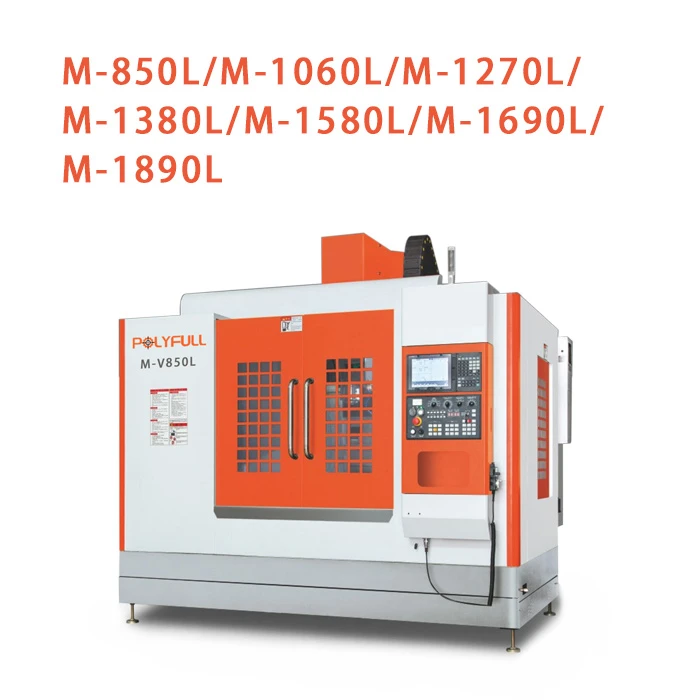
Now, let's talk about CNC (Computer Numerical Control) vertical machining centers. These are the modern - day marvels of the machining world. Instead of relying on manual operation, a CNC machine is controlled by a computer program. You input the design specifications into the computer, and the machine does the rest.
The precision of a CNC vertical machining center is outstanding. The computer controls the movement of the cutting tool with incredible accuracy. This means that you can produce parts with very tight tolerances, which is crucial in industries like aerospace and medical device manufacturing.
Another big advantage is the speed. Once the program is set up, the machine can run continuously, making cuts much faster than a human operator could. This leads to higher production rates and lower labor costs in the long run. CNC machines are also very versatile. You can easily change the program to produce different parts, which is great for shops that need to handle a variety of jobs.
But, CNC machines do come with some challenges. They are more expensive upfront. You need to invest in the machine itself, as well as the software and training for your operators. Also, if something goes wrong with the computer system, it can be more difficult to troubleshoot compared to a conventional machine.
Key Differences in Design and Functionality
Let's take a closer look at some of the key differences between the two types of machines in terms of design and functionality.
Control System
As mentioned earlier, the control system is the biggest difference. A conventional machine uses manual controls like handwheels and levers. The operator has to physically move these controls to position the cutting tool and the workpiece. In contrast, a CNC machine uses a computer program. The program tells the machine where to move the tool, how fast to move it, and how deep to cut.
Precision and Repeatability
CNC machines win hands - down when it comes to precision and repeatability. Since the computer controls the movement, every part produced is exactly the same. With a conventional machine, there can be slight variations from one part to the next, even when the operator is very careful.
Setup Time
Setting up a conventional machine for a new job can be time - consuming. The operator has to measure and adjust the tool and the workpiece manually. With a CNC machine, the setup time is much shorter. You just load the new program into the computer, and the machine is ready to go.
Production Volume
If you need to produce a large number of parts, a CNC machine is the way to go. It can run continuously, producing parts at a much faster rate than a conventional machine. For small - batch production or one - off jobs, a conventional machine might still be a good option.
Types of Vertical Machining Centers We Offer
As a supplier, we offer a range of vertical machining centers to meet different needs.
We have the Fixed - column type vertical machining center. This type of machine is known for its stability. The fixed column provides a solid base for the cutting operations, which is great for achieving high precision.
Our 3 Axis Vertical Machining Center is a popular choice. It allows for movement in three directions (X, Y, and Z), which gives you a lot of flexibility in machining different shapes and sizes of parts.
We also offer the High Rigidity 2 - Wire 1 - Hard Machining Center. This machine combines the best of both worlds. It has high rigidity, which means it can handle heavy - duty cutting operations, and it uses a combination of wire and hard - rail technology for smooth and precise movement.
Which One Should You Choose?
So, which type of vertical machining center is right for you? It really depends on your specific needs. If you're a small shop with a limited budget and you mainly do small - batch or one - off jobs, a conventional machine might be the best choice. It's affordable and easy to operate.
However, if you need high precision, high production speed, and the ability to produce parts with tight tolerances, a CNC machine is the way to go. It's an investment, but it can pay off in the long run by increasing your productivity and the quality of your products.
Let's Talk
If you're still not sure which type of vertical machining center is right for your business, or if you have any questions about our products, don't hesitate to reach out. We're here to help you make the best decision for your shop. Whether you're just starting out or looking to upgrade your existing equipment, we can provide you with the information and support you need.
References
- "Machining Technology: An Introduction" by Robert L. Norton
- "CNC Programming Handbook" by Peter Smid