

Hey there! As a supplier of Flat Bed CNC Lathes, I often get asked about various technical aspects of these machines. One question that pops up quite frequently is, "What is the coolant flow rate in a Flat Bed CNC Lathe?" Well, let's dive right into it and break it down.
First off, why is coolant so important in a Flat Bed CNC Lathe? Coolant serves several crucial functions. It helps to reduce heat generated during the machining process. When the cutting tool interacts with the workpiece, a significant amount of heat is produced. This heat can not only damage the cutting tool but also affect the quality of the machined surface. By using coolant, we can keep the temperature in check, which extends the tool life and improves the overall machining accuracy.
Coolant also acts as a lubricant. It reduces friction between the cutting tool and the workpiece, allowing for smoother cutting operations. This not only makes the machining process more efficient but also helps in achieving a better surface finish on the workpiece. Additionally, coolant helps to flush away the chips produced during machining. These chips can accumulate and interfere with the cutting process if not removed properly. The coolant carries the chips away from the cutting area, ensuring a clean and uninterrupted machining operation.
Now, let's talk about the coolant flow rate. The coolant flow rate refers to the volume of coolant that is delivered to the cutting area per unit of time. It is usually measured in liters per minute (L/min) or gallons per minute (GPM). Determining the right coolant flow rate is crucial for optimal performance of the Flat Bed CNC Lathe.
There isn't a one - size - fits - all answer when it comes to the ideal coolant flow rate. It depends on several factors. One of the most important factors is the type of machining operation. For example, if you're performing a heavy - duty roughing operation, you'll need a higher coolant flow rate. This is because roughing operations generate a large amount of heat and produce a lot of chips. A higher flow rate is required to effectively cool the cutting tool and flush away the chips. On the other hand, for a finishing operation, a lower flow rate might be sufficient as the heat generation and chip production are relatively less.
The type of cutting tool also plays a role in determining the coolant flow rate. Different cutting tools have different requirements. For instance, a high - speed steel (HSS) cutting tool might require a different coolant flow rate compared to a carbide cutting tool. Carbide tools are generally more heat - resistant, but they still need an adequate supply of coolant to maintain their performance and longevity.
The material of the workpiece is another factor. Machining a hard material like stainless steel or titanium generates more heat compared to machining a softer material like aluminum. So, when working with hard materials, a higher coolant flow rate is usually necessary to keep the cutting tool cool and prevent premature tool wear.
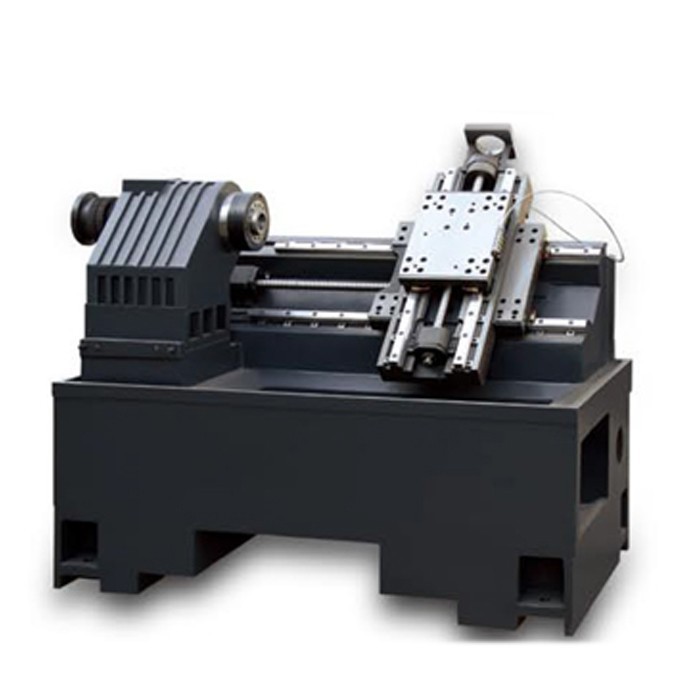

Let's take a look at some typical coolant flow rate ranges for different scenarios. In general, for light - duty machining operations, the coolant flow rate can be around 5 - 10 L/min (1.3 - 2.6 GPM). For medium - duty operations, the flow rate might range from 10 - 20 L/min (2.6 - 5.3 GPM). And for heavy - duty operations, the flow rate can go up to 20 - 50 L/min (5.3 - 13.2 GPM) or even higher in some cases.
At our company, we offer a variety of Flat Bed CNC Lathes, each designed to meet different machining needs. We have the Linear Rail Flat Bed CNC Lathe, which is known for its high - speed and precise machining capabilities. The coolant system in this lathe is optimized to provide the right flow rate for different operations. The linear rails ensure smooth movement of the machine components, and the coolant flow helps in maintaining the performance of the cutting tools.
Our Flat Bed Linear Guide Way CNC Lathe is another great option. It combines the advantages of linear guide ways for better accuracy and the right coolant flow rate to enhance the machining process. Whether you're doing small - scale or large - scale production, this lathe can handle it with ease.
If you're looking for a more robust and heavy - duty option, our Hard Rail Flat Bed CNC Lathe is the way to go. The hard rails provide excellent stability during heavy - duty machining operations, and the coolant system is designed to deliver a high flow rate to handle the heat and chips generated.
To ensure that you get the most out of your Flat Bed CNC Lathe, it's important to monitor and adjust the coolant flow rate as needed. You can use flow meters to measure the actual flow rate and make adjustments accordingly. Regular maintenance of the coolant system is also essential. This includes checking the coolant level, replacing the coolant when it gets contaminated, and ensuring that the coolant pumps and nozzles are working properly.
If you're in the market for a Flat Bed CNC Lathe or have any questions about coolant flow rates or other technical aspects, don't hesitate to reach out. We're here to help you make the right choice for your machining needs. Whether you're a small - scale workshop or a large - scale manufacturing facility, we have the right solution for you. Contact us today to start the conversation and explore how our Flat Bed CNC Lathes can improve your production efficiency and quality.
References
- "CNC Machining Handbook"
- "Coolant Technology in Metalworking"