

Hey there! As a supplier of Linear Rail CNC Machines, I often get asked about all sorts of technical stuff. One question that pops up quite a bit is, "What is the backlash compensation of a linear rail CNC machine?" Well, let's dive right into it.
First off, let's understand what backlash is. In a linear rail CNC machine, backlash is like that little bit of play or looseness in the movement of the machine's axes. You know how when you turn a steering wheel in a car, there's a tiny bit of movement before the wheels actually start to turn? That's kind of like backlash in a CNC machine. When the machine's motor changes direction, there's a small delay or movement where the nut on the lead screw or ball screw doesn't immediately start moving the table or the tool in the opposite direction. This can lead to inaccuracies in the machining process.

So, why is backlash a problem? Well, if you're making precise parts, even the slightest bit of backlash can throw off your measurements. Let's say you're cutting a part that needs to be exactly 100 millimeters long. If there's backlash in the machine, the actual length of the cut might end up being a little bit off, maybe 99.9 or 100.1 millimeters. That might not seem like a big deal, but in industries where precision is key, like aerospace or medical device manufacturing, those small differences can be a huge problem.
That's where backlash compensation comes in. Backlash compensation is a feature in many CNC machines that helps to correct for this play in the axes. There are a few different ways to implement backlash compensation. One common method is to use software. The CNC controller can be programmed to account for the amount of backlash in each axis. When the machine changes direction, the controller will send an extra command to the motor to make up for the lost movement due to backlash.
For example, let's say the measured backlash in the X-axis of a machine is 0.05 millimeters. When the machine changes direction in the X-axis, the controller will tell the motor to move an additional 0.05 millimeters to compensate for the backlash. This way, the actual movement of the table or tool will be more accurate.
Another way to reduce backlash is through mechanical means. Some linear rail CNC machines are designed with components that have less backlash built-in. For instance, high-quality ball screws are often used because they have less play compared to traditional lead screws. Additionally, proper maintenance and lubrication of the linear rails and screws can also help to minimize backlash over time.
Now, let's talk about how backlash compensation affects the performance of our Linear Rail CNC Machines. When we supply these machines to our customers, we know that they're looking for precision and reliability. By having effective backlash compensation, our machines can produce parts with a higher level of accuracy. This is especially important for customers who are working on complex projects or who need to meet strict tolerances.
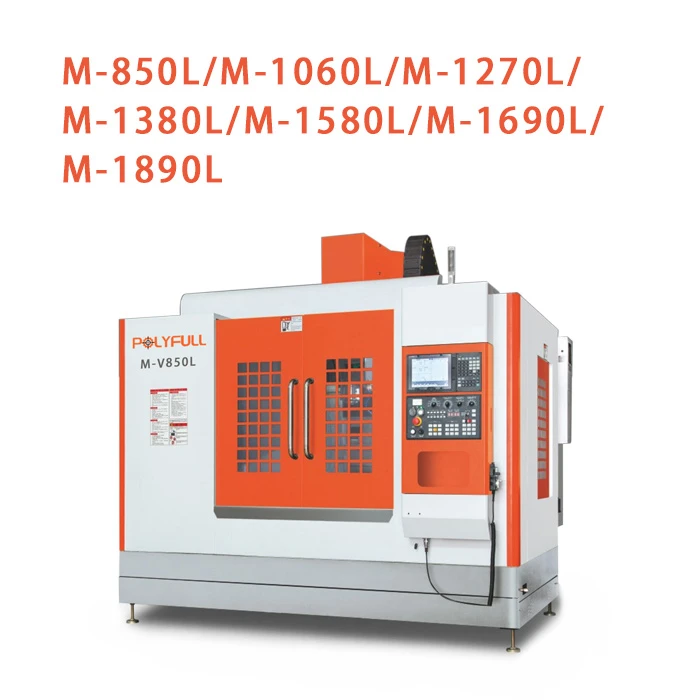
For example, if you're using one of our Large Vertical Machining Centers, which are great for big, heavy-duty jobs, the backlash compensation feature ensures that even large parts are machined with the same level of precision as smaller ones. These machines are designed to handle large workpieces, and the ability to compensate for backlash means that you can trust the accuracy of the final product.
Our Fixed-column type vertical machining center also benefits from backlash compensation. This type of machine is known for its stability and rigidity, and the backlash compensation feature further enhances its performance. Whether you're doing roughing or finishing operations, the machine can maintain a high level of accuracy throughout the machining process.
And then there's our High Rigidity 2-Wire 1-Hard Machining Center. This machine is built for high-speed and high-precision machining. The backlash compensation helps to keep the toolpath accurate, even at high speeds. This means that you can get more done in less time without sacrificing quality.
But how do you know if your machine needs backlash compensation? Well, there are a few signs to look out for. If you notice that your parts are coming out with inconsistent dimensions, or if there are small gaps or overlaps in the machined surfaces, it could be a sign of backlash. You can also measure the backlash using a dial indicator or other precision measuring tools. If the measured backlash is outside of the acceptable range for your application, then it's definitely time to consider using backlash compensation.
When it comes to setting up backlash compensation on our machines, we provide our customers with detailed instructions and support. Our technical team is always available to help you through the process, whether you're a seasoned CNC operator or just getting started. We want to make sure that you're getting the most out of your machine and that you're able to produce high-quality parts consistently.
In conclusion, backlash compensation is a crucial feature in linear rail CNC machines. It helps to improve the accuracy and reliability of the machining process, which is essential for our customers in various industries. Whether you're using one of our large vertical machining centers, fixed-column type vertical machining centers, or high-rigidity 2-wire 1-hard machining centers, the backlash compensation feature ensures that you can achieve the precision you need.
If you're in the market for a Linear Rail CNC Machine and want to learn more about how backlash compensation can benefit your operations, don't hesitate to reach out. We're here to answer your questions and help you find the right machine for your needs. Let's start a conversation about how we can work together to take your machining to the next level.
References:
- General knowledge of CNC machining and linear rail technology from industry experience.
- Technical manuals and specifications of our Linear Rail CNC Machines.