

Hey there! As a supplier of Inclined Bed CNC Lathes, I'm super excited to chat with you about the options for automatic part loading and unloading in these awesome machines. Inclined bed CNC lathes are known for their high precision, stability, and efficiency, and adding automatic part handling can take their performance to a whole new level.
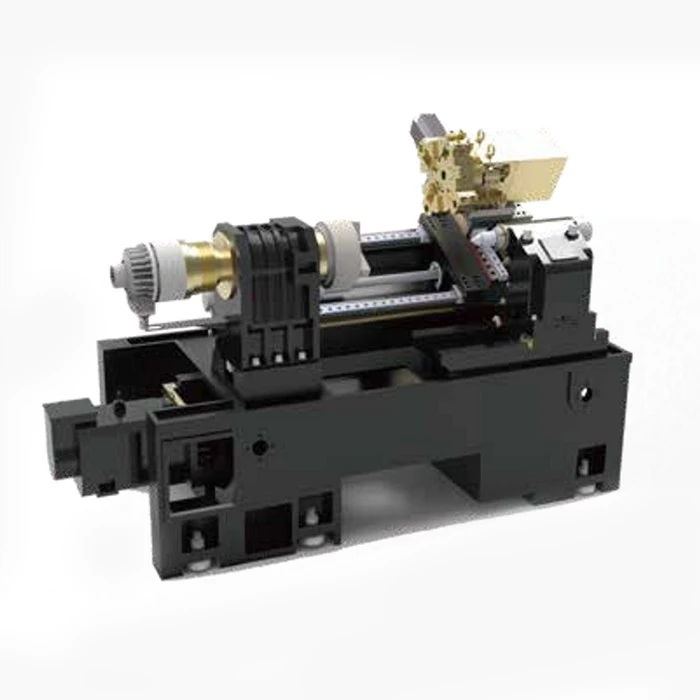
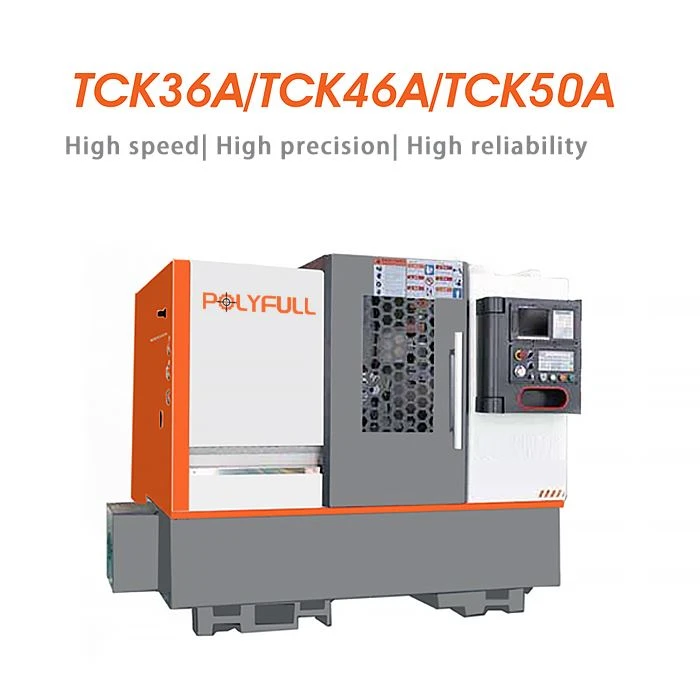
First off, let's quickly talk about our product range. We offer three main types of inclined bed CNC lathes: Integral inclined-bed hard - track CNC lathe, Inclined - bed line - rail CNC lathe, and Turning and Milling Compound CNC Lathe. Each of these machines has its unique features and is suitable for different machining requirements.
Now, let's dive into the options for automatic part loading and unloading.
1. Robotic Arms
Robotic arms are one of the most popular choices for automatic part handling in inclined bed CNC lathes. They're incredibly versatile and can perform a wide range of tasks.
How they work
A robotic arm is usually mounted near the lathe. It can be programmed to pick up raw parts from a feeding area, such as a pallet or a conveyor belt, and place them into the lathe's chuck. After the machining process is complete, the robot then removes the finished part and places it in a collection area.
Advantages
- High flexibility: Robotic arms can be easily reprogrammed to handle different part sizes, shapes, and weights. This makes them suitable for both small - batch and large - batch production.
- Precision: They can position parts with high accuracy, ensuring consistent machining quality.
- Safety: By automating the loading and unloading process, robotic arms reduce the risk of accidents caused by manual handling.
Disadvantages
- High cost: The initial investment for a robotic arm system can be quite high, including the cost of the robot, programming, and installation.
- Complex maintenance: Robots require regular maintenance and may need specialized technicians to troubleshoot and repair them.
2. Conveyor Systems
Conveyor systems are another common option for automatic part loading and unloading.
How they work
Conveyor belts can be set up to transport raw parts to the lathe and finished parts away from it. The lathe is usually integrated with the conveyor system, and sensors are used to detect the position of the parts. When a part reaches the loading position, the lathe's chuck can grab it, and after machining, the finished part is released onto the conveyor for further processing or storage.
Advantages
- Continuous operation: Conveyor systems allow for continuous production, as parts can be fed into the lathe one after another without much downtime.
- Simple design: They are relatively simple in design and easy to install and maintain.
- Cost - effective: Compared to robotic arms, conveyor systems are generally more affordable, especially for high - volume production of simple parts.
Disadvantages
- Limited flexibility: Conveyor systems are best suited for parts with a consistent shape and size. Handling irregular parts can be challenging.
- Space requirements: They can take up a significant amount of floor space, which may be a limitation in a small workshop.
3. Gantry Loaders
Gantry loaders are a great option for larger - scale production.
How they work
A gantry loader consists of a bridge - like structure that spans over the lathe. It has a moving carriage with a gripper or other part - handling device. The gantry can move in multiple axes to pick up parts from a storage area and place them in the lathe.
Advantages
- High - speed operation: Gantry loaders can move quickly and efficiently, reducing the cycle time for part loading and unloading.
- Heavy - duty handling: They are capable of handling large and heavy parts, which is ideal for industries such as automotive and aerospace.
- Accuracy: Gantry loaders can position parts with high precision, ensuring accurate machining.
Disadvantages
- High initial investment: Similar to robotic arms, gantry loaders can be quite expensive to purchase and install.
- Complex installation: The installation process can be complex and may require significant modifications to the workshop layout.
4. Magazine Loaders
Magazine loaders are a good choice for small - to medium - sized parts.
How they work
A magazine loader is a storage unit that holds multiple parts. The parts are arranged in a specific order, and the loader can feed them into the lathe one by one. The magazine can be designed to accommodate different part sizes and shapes.
Advantages
- Compact design: Magazine loaders take up less space compared to some other loading and unloading systems.
- Efficient for small parts: They are well - suited for handling small parts with high precision.
- Quick changeover: It's relatively easy to change the parts in the magazine, which is beneficial for small - batch production.
Disadvantages
- Limited capacity: The number of parts that a magazine can hold is limited, which may require frequent reloading for large - volume production.
- Part compatibility: Some magazine loaders may have limitations in terms of the types of parts they can handle.
Choosing the Right Option
When choosing an automatic part loading and unloading system for your inclined bed CNC lathe, there are several factors to consider:
- Part characteristics: The size, shape, weight, and material of the parts will determine which system is most suitable. For example, if you're machining small, delicate parts, a magazine loader or a robotic arm may be a better choice.
- Production volume: High - volume production may require a conveyor system or a gantry loader for continuous and efficient operation, while low - volume or custom production may benefit from the flexibility of a robotic arm.
- Budget: The cost of the loading and unloading system, including the initial investment, installation, and maintenance, should fit within your budget.
- Workshop space: Consider the available floor space in your workshop. Some systems, like conveyor systems and gantry loaders, require more space than others.
If you're interested in learning more about our inclined bed CNC lathes and the automatic part loading and unloading options we offer, don't hesitate to reach out. We can help you choose the right solution for your specific needs and provide you with all the information you need to make an informed decision. Whether you're a small - scale manufacturer or a large industrial company, we're here to support you in optimizing your machining processes.
So, if you're ready to take your production to the next level, let's start a conversation about how our products can fit into your operations. We look forward to hearing from you and working together to achieve your manufacturing goals.
References
- "CNC Machine Tool Automation: A Comprehensive Guide" by John Doe
- "Advanced Manufacturing Technologies" by Jane Smith
- Industry reports on CNC lathe automation trends