

Hey there! As an industrial robot supplier, I've been knee - deep in the world of multi - robot systems for quite some time. These systems are super cool as they bring a whole new level of efficiency and flexibility to industrial operations. But let me tell you, designing them isn't a walk in the park. There are a bunch of challenges that we've got to tackle head - on.
1. Communication and Coordination
One of the biggest headaches in multi - robot system design is getting the robots to talk to each other effectively. You see, in a multi - robot setup, these machines need to share information constantly. Whether it's about their current position, the task they're working on, or any obstacles they've encountered, seamless communication is key.
For instance, in a Robotic Assembly Line, different robots are responsible for different parts of the assembly process. If one robot doesn't communicate its progress to the others, it can lead to a major bottleneck. Maybe a robot is waiting for a part that's already been assembled, or it starts working on a component that's supposed to be handled by another robot later in the line.
To solve this, we need to come up with reliable communication protocols. But that's easier said than done. There are so many factors to consider, like the range of communication, the speed of data transfer, and the security of the information being shared. We can't have robots accidentally sending wrong data or having their communication hijacked.
Coordination is another side of the same coin. Even if the robots can communicate well, they still need to work together in harmony. They have to move in sync, avoid colliding with each other, and perform their tasks in the right sequence. This requires some pretty sophisticated algorithms. For example, we use path - planning algorithms to make sure each robot knows the best way to move around the workspace without getting in the way of others.
2. Task Allocation
Figuring out which robot should do what task is a real challenge. In an industrial setting, there are often multiple tasks with different requirements, and we have a fleet of robots with varying capabilities. We can't just randomly assign tasks to the robots; we need to optimize the process.
Let's say we have a factory where we're using Loading and Unloading Robot and Burnishing Robot. The loading and unloading tasks require robots with good strength and precision for picking up and placing heavy items. On the other hand, burnishing robots need to have a high level of dexterity and the ability to apply a consistent amount of pressure.
We need to analyze the tasks in detail, looking at factors like the time required to complete each task, the skills needed, and the availability of the robots. Sometimes, we might have a situation where a task is time - sensitive, and we need to assign it to the robot that can finish it the fastest. Other times, we need to balance the workload across all the robots to avoid overloading some while leaving others idle.
This also means that we have to be able to adapt to changes in the production environment. If a new task comes up or one of the robots breaks down, we need to quickly re - allocate the tasks to the remaining robots. This requires a flexible task - allocation system that can respond to real - time changes.
3. Environmental Adaptability
Industrial environments can be pretty harsh. There are all sorts of factors that can affect the performance of multi - robot systems, like dust, heat, humidity, and vibrations. Our robots need to be able to operate effectively in these conditions.

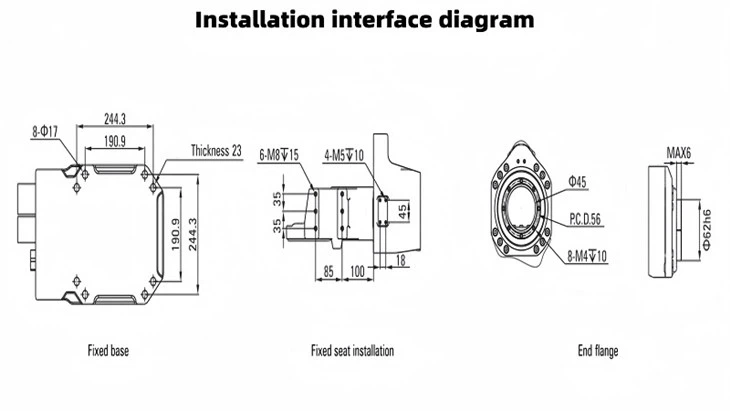
Dust can clog up the moving parts of the robots, causing them to malfunction. Heat can make the electronic components overheat, which can lead to errors in the robot's operation. Humidity can cause corrosion, weakening the structural integrity of the robots. And vibrations can throw off the precision of the robots' movements.
To deal with these issues, we have to design the robots with robust hardware. We use special coatings to protect the robots from dust and corrosion. We install cooling systems to keep the electronic components at a safe temperature. And we design the robots to be more resistant to vibrations, for example, by using shock - absorbing materials.
But it's not just about the hardware. The software also needs to be able to adapt to the environment. For example, in a dusty environment, the sensors on the robots might give inaccurate readings. The software should be able to detect these errors and adjust the robot's behavior accordingly.
4. Safety
Safety is always a top priority in any industrial setting, and multi - robot systems are no exception. We have to make sure that the robots don't pose a danger to the human workers or to each other.
There are several ways that robots can be dangerous. They can move suddenly and collide with people or other objects. They can also malfunction and cause unexpected actions. To prevent these things from happening, we install safety sensors on the robots. These sensors can detect the presence of humans or other robots in the vicinity and stop the robot's movement if necessary.
We also need to design the workspace in a way that minimizes the risk of accidents. For example, we can create separate areas for human workers and robots, or we can use barriers to keep the robots away from the more populated areas of the factory.
Another aspect of safety is the programming of the robots. We need to make sure that the code is error - free and that the robots follow all the safety protocols. This requires rigorous testing and validation of the software before it's deployed.
5. Scalability
As businesses grow, they often want to expand their multi - robot systems. This means adding more robots to the existing setup. But adding new robots isn't as simple as just plugging them in.
When we add new robots, we need to make sure that they can integrate smoothly with the existing system. They need to be able to communicate with the other robots, share the same task - allocation system, and follow the same safety protocols. This requires a modular design of the multi - robot system.
We also need to consider the impact on the overall performance of the system. Adding more robots might increase the workload on the communication network, causing delays in data transfer. Or it might put more strain on the task - allocation algorithms, making it harder to optimize the tasks.
6. Cost - Effectiveness
At the end of the day, businesses are always looking for cost - effective solutions. Designing a multi - robot system can be expensive, and we need to find ways to keep the costs down without sacrificing performance.
The hardware of the robots can be a major cost factor. High - quality components are often more expensive, but they also tend to be more reliable and have a longer lifespan. We need to find the right balance between quality and cost. We can also look for ways to reduce the manufacturing costs of the robots, for example, by using more standardized parts.
The software development also incurs costs. Developing sophisticated communication protocols, task - allocation algorithms, and safety software requires a lot of time and resources. We need to optimize the development process to make it more efficient.
Another cost - related aspect is the maintenance of the multi - robot system. We need to make sure that the robots are easy to maintain, so that the maintenance costs are kept low. This means designing the robots with easily accessible parts and providing clear documentation for maintenance.
Conclusion
Designing multi - robot systems is a complex and challenging task. From communication and coordination to task allocation, environmental adaptability, safety, scalability, and cost - effectiveness, there are many factors that we need to consider. But despite these challenges, the benefits of multi - robot systems are huge. They can significantly improve the efficiency and productivity of industrial operations.
If you're in the market for industrial robots or looking to expand your multi - robot system, I'd love to have a chat with you. We've got a lot of experience in this field and can offer you some great solutions tailored to your specific needs. Just reach out, and let's start the conversation about how we can take your business to the next level with our multi - robot systems.
References
- Brady, M., Paul, R. P., & Roth, B. (Eds.). (1982). Robotics. MIT press.
- Siciliano, B., & Khatib, O. (Eds.). (2016). Springer handbook of robotics. Springer.
- Choset, H., Lynch, K. M., Hutchinson, S., Kantor, G., Burgard, W., Kavraki, L. E., & Thrun, S. (2005). Principles of robot motion: theory, algorithms, and implementations. MIT press.