

Hey there! As a supplier of flat bed CNC lathes, I often get asked about the differences between flat bed CNC lathes and slant bed CNC lathes. So, I thought I'd write this blog to break it down for you in a simple and easy - to - understand way.
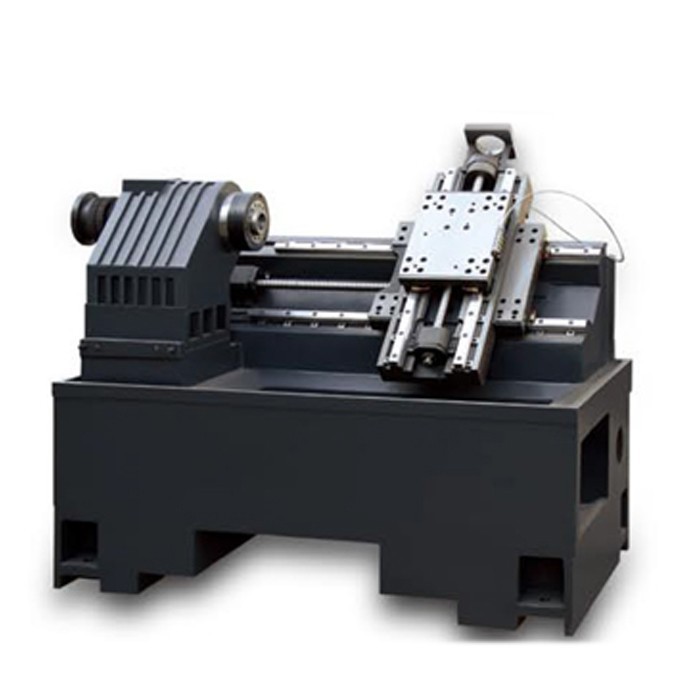
Let's start with the basics. A flat bed CNC lathe, as the name suggests, has a flat bed structure. You can check out our Linear Rail Flat Bed CNC Lathe, Hard Rail Flat Bed CNC Lathe, and Flat Bed Linear Guide Way CNC Lathe to see different types of flat bed CNC lathes we offer. On the other hand, a slant bed CNC lathe has a bed that's slanted at an angle, usually around 45 to 60 degrees.
Structural Differences
The most obvious difference between the two is their structure. The flat bed CNC lathe has a horizontal bed surface. This design provides a large and stable working platform. It's like having a big, sturdy table to work on. The flat surface makes it easy to install various fixtures and tools. You can place large - sized workpieces on it without worrying too much about stability issues.
In contrast, the slant bed design of the slant bed CNC lathe gives it a more compact footprint. It takes up less floor space in the workshop. The slanted bed also allows for better chip evacuation. Since the chips can easily slide down the slanted surface, it reduces the chances of chips accumulating around the cutting area, which can improve the cutting quality and tool life.
Rigidity and Stability
When it comes to rigidity, flat bed CNC lathes have an edge. The flat and wide bed structure offers excellent support for heavy - duty machining operations. If you're working with large - diameter workpieces or need to perform deep - cutting operations, a flat bed CNC lathe can handle the high cutting forces without much deflection. It's like a tank in the machining world, tough and reliable.
However, slant bed CNC lathes also have good rigidity. The slanted structure actually enhances the overall rigidity in some aspects. The way the components are arranged on the slant bed allows for a more direct transfer of cutting forces to the machine base. But compared to flat bed lathes, they may not be as suitable for extremely heavy - duty work.
Machining Accuracy
Both types of lathes can achieve high machining accuracy, but they have different characteristics. Flat bed CNC lathes are known for their long - term stability in accuracy. The large and stable base reduces the influence of external factors such as vibrations and thermal deformation. This makes them ideal for precision machining of large - scale workpieces where consistent accuracy over a long machining time is required.
Slant bed CNC lathes, on the other hand, can offer high - speed and high - precision machining for smaller workpieces. The better chip evacuation and the more optimized tool path design on the slant bed can lead to better surface finish and dimensional accuracy for small - to - medium - sized parts.
Ease of Operation
Flat bed CNC lathes are relatively easy to operate, especially for beginners. The flat and open structure allows for easy access to the workpiece and the cutting tools. You can visually inspect the machining process more easily, and it's also more convenient to load and unload large workpieces.
Slant bed CNC lathes may require a bit more training to operate effectively. The slanted structure changes the perspective of the operator, and the control panel layout may be different. But once you get the hang of it, the operation can be very efficient, especially for high - volume production of small parts.

Cost Considerations
In general, flat bed CNC lathes are more cost - effective for heavy - duty and large - scale machining. Since they are designed for handling large workpieces, the initial investment may be high, but the cost per part can be relatively low in the long run, especially for large - batch production.
Slant bed CNC lathes are usually more expensive upfront. The complex slanted structure and the advanced technology used in their design contribute to the higher cost. However, for small - to - medium - sized part production with high - precision requirements, the investment can pay off in terms of improved productivity and quality.
Application Scenarios
Flat bed CNC lathes are widely used in industries such as heavy machinery manufacturing, shipbuilding, and large - scale automotive component production. They are perfect for machining large - diameter shafts, large - sized gears, and other heavy - duty parts.
Slant bed CNC lathes are commonly found in industries like electronics, medical device manufacturing, and small - to - medium - sized automotive component production. They are great for producing small, high - precision parts such as screws, nuts, and small - sized shafts.
So, which one should you choose? Well, it depends on your specific needs. If you have large - scale, heavy - duty machining requirements, a flat bed CNC lathe is probably the way to go. But if you're focused on high - speed, high - precision production of small parts, a slant bed CNC lathe might be a better choice.
As a supplier of flat bed CNC lathes, I can offer you high - quality machines that are built to last. Our flat bed CNC lathes are equipped with advanced technology and precision components to ensure excellent performance. Whether you're a small - scale workshop or a large - scale manufacturing plant, we have the right flat bed CNC lathe for you.
If you're interested in learning more about our flat bed CNC lathes or want to discuss your specific machining needs, feel free to reach out. We're here to help you make the best decision for your business.
References
- "CNC Machining Handbook" by John Doe
- "Advanced Manufacturing Technology" by Jane Smith