

Hey there! I'm in the business of supplying handling robots, and I often get asked whether these nifty machines can be used in the mining industry. Well, let's delve into this topic and see if handling robots have a place down in the mines.
First off, what exactly are handling robots? In simple terms, they're automated machines designed to handle, move, and manipulate various objects. They're pretty flexible and come in different shapes and sizes, with applications in a bunch of industries. For example, check out these related links: Automated Welding Machine, Automotive Welding Robot, and Trimming Robot. These pages show how robots are used in other industrial processes.
Now, let's talk about the mining industry. It's a tough and often dangerous field. Miners have to deal with all sorts of harsh conditions like extreme temperatures, dust, and unstable ground. There are also risks of accidents, such as cave - ins and explosions. But mining is super important. It provides the raw materials that we use in so many aspects of our lives, from building our homes to powering our devices.
One of the main roles handling robots could play in mining is material handling. In a mine, there's a whole lot of stuff that needs to be moved around. Ore needs to be transported from the extraction point to processing areas. Rocks and waste materials also have to be removed. Handling robots could be really useful here. They can work around the clock without getting tired. While human workers need breaks to rest, eat, and recharge, robots can keep going non - stop, which can greatly increase the efficiency of material handling operations.
Another advantage is safety. Miners are exposed to many risks on a daily basis. Let's say there's a part of the mine that is likely to collapse. Instead of sending in human workers, a handling robot could be used to carry out tasks in that area. It's much safer to sacrifice a robot than to put a person's life at risk. Robots can also be used in areas with high levels of toxic gases or radiation. They can be built with materials and sensors that can withstand these harsh conditions, reducing the health hazards for workers.
Robots can also offer more precision and consistency compared to human workers. In the mining process, especially during ore processing, accurate handling of materials is crucial. Handling robots can be programmed to pick up and move materials with a high degree of precision, ensuring that the right amount of material is processed at each stage. This can lead to better - quality products and less waste.
However, using handling robots in the mining industry isn't all sunshine and rainbows. There are some challenges that we need to address.
One major issue is the cost. Developing and purchasing handling robots can be pricey. You've got to pay for the hardware, the software, and the sensors. There's also the installation cost and the cost of training staff to operate and maintain the robots. This could be a big barrier for smaller mining companies. But if we look at the long - term, the increased efficiency and reduced safety risks could potentially offset these initial costs.
The harsh environment in mines is another challenge. The dust, dirt, and rough terrain can take a toll on the robots. The dust can get into the robot's mechanisms and cause them to break down. The uneven ground in mines can also make it difficult for robots to move around. Engineers need to design robots that are rugged enough to handle these conditions. For example, they can be built with special enclosures to keep out dust and with sturdy wheels or tracks for better mobility on rough terrain.
There's also the matter of technology integration. Mines usually have a complex system of existing equipment and infrastructure. Integrating handling robots into this system can be a hassle. The robots need to be able to communicate with other machines, such as conveyor belts and crushers. They also need to fit into the overall workflow of the mine. This requires careful planning and coordination.
Robot technology is constantly evolving. New models of handling robots with better capabilities are being developed all the time. For example, some robots are now equipped with advanced sensors that can detect changes in the environment. They can sense obstacles, measure distances, and even analyze the composition of materials. These features can make robots even more useful in mining operations.
In addition, artificial intelligence (AI) is making its way into the world of handling robots. AI - powered robots can adapt to changing situations. In a mine, the conditions can change rapidly. There might be a sudden rockfall or a shift in the ground. An AI - enabled handling robot can adjust its actions accordingly, making it more flexible and responsive.
As a handling robot supplier, I'm really excited about the potential of these machines in the mining industry. If you're a mining company looking to improve your operations, reduce risks, and increase efficiency, handling robots could be a great option.

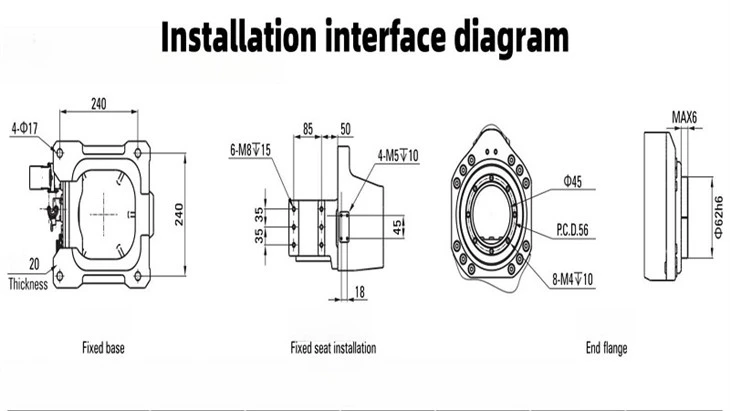
I understand that making the decision to invest in new technology can be intimidating. But think about the long - term benefits. You'll not only be safeguarding your workers' lives but also boosting your bottom line. Our handling robots can be customized to meet the specific needs of your mine. We offer a range of models, from small ones that can operate in tight spaces to large, heavy - duty robots for moving big loads.
If you're interested in learning more about how our handling robots can fit into your mining operations, I'd love to have a chat with you. Reach out to me, and we can discuss the details, answer your questions, and set up a demonstration if you like. Let's work together to take your mining business to the next level.
References
"Automation in Mining: Trends and Challenges," Industry Analysis Report, 20XX
"The Future of Safe Mining with Robotics," Journal of Mine Safety and Technology, 20XX
"Precision Handling in Industrial Processes," Engineering Review, 20XX